At a glance: the best calcium for iguanas is a phosphorus free powder with no added vitamin D3. Dust it on greens 4 to 5 times a week for juveniles and 1 to 2 times a week for adults. A healthy iguana under proper UVB makes its own vitamin D3 in the skin.
As an Amazon Associate, Lizardist earns from qualifying purchases. Some product links on this page are affiliate links.
- Best overallZoo Med Repti Calcium without D3View on Amazon
- Best for weak or missing UVBZoo Med Repti Calcium with D3View on Amazon
- Best alternate no D3 powderRep-Cal Phosphorus-Free Calcium PowderView on Amazon
- Best multivitamin rotationZoo Med ReptiviteView on Amazon
The best calcium for iguanas is a phosphorus free powder with no vitamin D3. It suits iguanas kept under quality UVB lighting. Dust it on greens 4 to 5 times a week for growing animals and 1 to 2 times a week for adults.
Iguanas need roughly twice as much calcium as phosphorus in the diet. Greens alone rarely hit that mark. A calcium powder closes the gap that a salad leaves open.
Vitamin D3 is the exception, not the default. A green iguana under a working UVB bulb makes its own D3 from that light. A calcium with D3 powder only belongs in the rotation when UVB is weak, aging, or missing.
What to look for in an iguana calcium supplement
Check the label for three things before buying. Look at whether phosphorus is present, whether vitamin D3 is added, and how fine the powder is. A fine powder sticks to wet greens far better than a coarse one.
Iguanas are strict herbivores. A supplement built for gut loading crickets or other feeder insects is the wrong shape of product, even when the calcium content looks similar on paper.
The core biology comes down to a ratio. A Cornell University case study on metabolic bone disease in green iguanas puts the target dietary calcium to phosphorus ratio at 1:1 to 2:1. Common feeder greens land on both sides of that line.
Romaine lettuce sits around 0.8:1 calcium to phosphorus and iceberg around 0.9:1. Broccoli leaf sits around 3.9:1, well above the target. Spinach reads about 2:1 on paper, but its oxalates bind the calcium, which is why VCA lists spinach, Swiss chard, and beet greens among the greens that block calcium absorption.
A diet built mostly on the wrong greens stays calcium poor. That holds true no matter how much lettuce goes in the bowl.
| Supplement type | Contains D3 | Use when | Frequency |
|---|---|---|---|
| Calcium, no D3 | No | UVB bulb works and the iguana basks under it daily | 4 to 5x weekly (juvenile), 1 to 2x weekly (adult) |
| Calcium with D3 | Yes | UVB is old, absent, or the iguana avoids the basking zone | 1 to 2x weekly, in place of a no D3 dose |
| Multivitamin | Varies, check label | General micronutrient gaps beyond calcium | Twice monthly (adult), twice weekly (growing) |
VCA Animal Hospitals guidance on feeding iguanas names the greens that should anchor the diet. Collard greens, mustard greens, turnip greens, kale, bok choy, and dandelion greens should make up 40 to 50 percent of the adult diet.
Additional vegetables make up another 30 to 40 percent. Fruit stays under 20 percent. See our full green iguana diet guide for the complete feeding plan.
Dusting is the backstop for the days when the salad leans light on those calcium rich greens. It is not a substitute for getting the greens right in the first place. The best calcium for iguanas works alongside a calcium forward salad, not in place of one.
The best calcium and vitamin picks for iguanas

Zoo Med Repti Calcium without D3
Best for iguanas kept under working UVB lighting
- Phosphorus free calcium carbonate
- No added vitamin D3
- Fine powder for dusting greens
Why we pick it
- Matches the calcium only need of an iguana that already makes D3 from UVB
- Avoids stacking dietary D3 on top of UVB conversion
- Fine texture clings to wet greens without clumping
Keep in mind
- Not for animals without reliable UVB access

Zoo Med Repti Calcium with D3
Best as a backup dose when UVB is aging or unreliable
- Calcium carbonate with added D3
- Powder form for dusting
- Meant to rotate with a no D3 powder
Why we pick it
- Covers the gap when a UVB bulb is due for replacement
- Useful during a vet recheck period for a hypocalcemic iguana
Keep in mind
- Avoid over supplementing D3 if strong UVB is also present; alternate with a no D3 calcium on other feedings
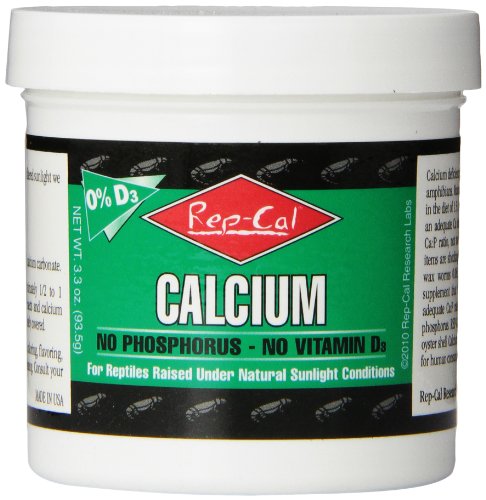
Rep-Cal Phosphorus-Free Calcium Powder (no D3)
Best for iguanas with outdoor or natural sunlight access
- Phosphorus free calcium
- No added D3
- Fine dusting powder
Why we pick it
- Natural sunlight already supplies D3 for iguanas with real outdoor basking time
- Works as a second option for households that already stock a different brand
Keep in mind
- Not for animals lacking UVB or natural sun
- Do not confuse with a D3 added formula from the same maker

Zoo Med Reptivite
Best for filling micronutrient gaps beyond calcium
- Multivitamin and mineral powder
- Used in rotation, not every feeding
- Complements a separate calcium powder
Why we pick it
- Calcium powders alone do not cover the full micronutrient list an iguana needs
- A set rotation schedule avoids relying on calcium powder for everything
Keep in mind
- Follow a vet reviewed schedule; twice monthly for adults is a common starting point
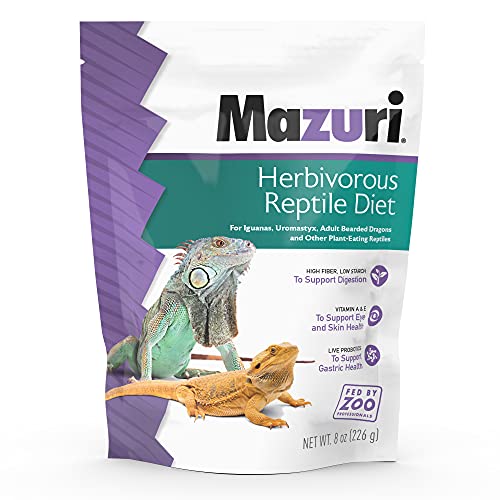
Mazuri Herbivorous Reptile Diet
Best as a calcium forward base food alongside fresh greens
- Formulated herbivore reptile pellet
- Meant to supplement, not replace, fresh greens
- Introduce gradually
Why we pick it
- A formulated base diet helps balance calcium and phosphorus between meals of variable greens
- Useful for iguanas that are picky about calcium rich greens
Keep in mind
- Introduce gradually alongside fresh greens
- Not all iguanas readily accept pellets, and pellets do not replace calcium dusting
Comparison table
| Product | Type | Best for | |
|---|---|---|---|
| Zoo Med Repti Calcium without D3 | Calcium, no D3 | Iguanas under working UVB | View |
| Zoo Med Repti Calcium with D3 | Calcium with D3 | Weak, aging, or missing UVB | View |
| Rep-Cal Phosphorus-Free Calcium Powder | Calcium, no D3 | Outdoor or natural sun access | View |
| Zoo Med Reptivite | Multivitamin | Micronutrient rotation | View |
| Mazuri Herbivorous Reptile Diet | Pellet diet | Calcium forward base food | View |
How to dust and dose calcium the right way
Dust greens lightly right before feeding. A shaker or a small bag works well. The goal is a light coat, not a white crust.
Wet greens hold powder better than dry ones. A light misting before dusting helps a fine powder stick evenly.
Follow a schedule tied to age and UVB quality, not habit. Hatchling and juvenile iguanas still building bone mass need a no D3 calcium 4 to 5 times a week. That tapers to 1 to 2 times a week once growth slows in adulthood, the schedule VCA gives for adult iguanas.
A multivitamin with D3 runs on its own, less frequent schedule. VCA feeding guidance for iguanas lists twice weekly for growing animals and twice monthly for adults as a common starting point.
Never combine a D3 calcium and a D3 multivitamin on the same day. Do not run D3 supplementation at full frequency alongside strong working UVB either. Vitamin D3 is fat soluble and builds up in the body over time.
Oversupplementing D3 alongside good UVB is one of the more common dosing mistakes with pet iguanas. When in doubt, use less D3, not more.
Common mistakes with iguana calcium supplementation
The most frequent error is skipping UVB and leaning on a D3 powder to cover the gap permanently. Dietary D3 was never meant to be the sole source for a species built to make its own from strong sunlight.
UVB output also drops well before a bulb visibly dims. A bulb on a six month replacement schedule can already be producing too little UVB for calcium metabolism to work.
A second mistake is choosing greens by what the iguana prefers, not by calcium content. Iceberg and romaine lettuce get eaten readily but sit below the target ratio, and spinach loses much of its calcium to oxalates.
Collard greens, mustard greens, and turnip greens sit much higher. They should form the base of the salad, not an occasional topping, the same principle that guides what any pet lizard should eat day to day.
A third mistake treats calcium and D3 supplements as interchangeable. A no D3 powder and a D3 powder solve different problems.
Using the wrong one, or both at full frequency, causes trouble either way. It leaves a UVB lit iguana short on plain calcium, or pushes a well lit iguana toward D3 excess.
Signs of low calcium and metabolic bone disease
Merck Veterinary Manual guidance on nutritional and metabolic diseases of reptiles names nutritional secondary hyperparathyroidism as the form of bone disease seen most in rapidly growing herbivorous and insectivorous lizards, iguanas included. It comes from a low calcium to phosphorus ratio, vitamin D3 deficiency, or too little UVB, often together.
Early signs include reduced appetite and general lethargy. Merck also lists swollen or distorted jaws and long bones, muscle twitching, and pathologic fractures of the limbs and spine as the disease advances.
A Cornell case study on iguana metabolic bone disease lists hind limb weakness, muscle tremors, and an inability to bear weight as clinical signs. Constipation is another common sign.
Radiographs show decreased bone density in affected iguanas. Advanced cases can show spinal fractures. LafeberVet client education material on metabolic bone disease covers the same underlying cause for owners working through a diagnosis with their vet.
An iguana showing any of these signs needs a reptile veterinarian promptly, not a home supplementation change alone. Correcting diet and UVB matters, but it is not enough on its own.
An iguana already hypocalcemic from months of poor supplementation may need veterinary calcium therapy first. Diet correction alone cannot catch up fast enough by itself.
See also: for the full breakdown of what a healthy iguana eats day to day, see our green iguana diet guide. For background on the species overall, visit the green iguana care hub.
Frequently Asked Questions
Do iguanas need calcium with D3 or without D3?
Most iguanas under working UVB lighting need a phosphorus free calcium powder without added D3. They already make vitamin D3 from that UVB exposure. A calcium with D3 is reserved for iguanas with weak, aging, or absent UVB.
How often should I dust my iguana’s food with calcium?
Juvenile and growing iguanas typically get a no D3 calcium powder on greens 4 to 5 times a week. Adults usually need it 1 to 2 times a week. A multivitamin goes in on a separate, less frequent schedule.
What is the ideal calcium to phosphorus ratio for iguanas?
A dietary ratio of about 1:1 to 2:1 calcium to phosphorus is the target for green iguanas. Many common feeder greens fall well below that ratio. That gap is why calcium powder and calcium rich greens both matter.
Can too much calcium or vitamin D3 hurt an iguana?
Vitamin D3 is fat soluble and can build up to toxic levels. This happens when a D3 supplement runs at full frequency alongside strong working UVB. Plain calcium overdose from diet alone is far less common.
Can I use a bearded dragon or gecko calcium supplement for my iguana?
The same base products often work across species since the core ingredient is calcium carbonate. The dosing schedule differs by species, age, and UVB setup. Check that the product is phosphorus free and matches the UVB setup on hand.
Do calcium supplements replace the need for UVB lighting?
No. Calcium powder addresses dietary calcium and phosphorus balance, not D3 synthesis. Vitamin D3 for calcium absorption still depends on UVB exposure in most cases.
A D3 supplement can bridge a temporary gap. It does not replace working UVB long term.
Sources
- Merck Veterinary Manual: Nutritional, Metabolic, and Endocrine Diseases of Reptiles. https://www.merckvetmanual.com/exotic-and-laboratory-animals/reptiles/nutritional-metabolic-and-endocrine-diseases-of-reptiles
- VCA Animal Hospitals: Feeding Iguanas. https://vcahospitals.com/know-your-pet/iguanas-feeding
- Cornell University eCommons: Metabolic Bone Disease in a Green Iguana (Iguana iguana). https://ecommons.cornell.edu/server/api/core/bitstreams/20a219db-7546-4b92-9ec8-3e28d7ed8fcf/content
- LafeberVet: Metabolic Bone Disease. https://lafeber.com/vet/metabolic-bone-disease/