At a glance: Josh’s Frogs Tropical BioBedding is the best substrate for crested geckos. It holds humidity in the 50 to 80 percent range veterinarians cite without turning soggy. Skip loose sand, walnut shell, and wood shavings, since a swallowed bite can cause a blockage.
As an Amazon Associate, Lizardist earns from qualifying purchases. Some product links on this page are affiliate links.
- Best overallJosh’s Frogs Tropical BioBeddingView on Amazon
- Best for DIY bioactive buildsThe Bio Dude Terra FaunaView on Amazon
- Best budget coco fiber baseZoo Med Eco Earth Coconut FiberView on Amazon
The best substrate for crested geckos holds humidity, drains well, and will not hurt the gecko if a bite gets swallowed. That short list rules out sand, gravel, and most reptile carpet. It points toward bioactive soil mixes, coco fiber, and sphagnum moss instead.
Crested geckos come from the rainforests of New Caledonia, at elevations of roughly 150 to 1000 meters. Yearly rainfall there can top 13 feet, and the geckos spend their days resting low in wet vegetation near the forest floor.
A dry sandy floor does not match that background, and neither does a substrate that stays wet enough to grow mold. Our full crested gecko care guide covers the rest of their needs.
What to Look for in a Crested Gecko Substrate
Three things matter most. How well the substrate holds humidity, whether it is safe if swallowed, and whether it can support a cleanup crew for a true bioactive setup.
Veterinary targets for crested gecko humidity differ a little. One exotics practice cites 50 to 60 percent and another 60 to 80 percent. Aim for 60 percent as a middle ground and check a hygrometer rather than guessing by eye.
Loose substrates that clump slightly when damp, like coco fiber and topsoil blends, hold that humidity between mistings. Paper towel and reptile carpet do not. They dry out within hours in a warm room.
Avoid calcium sand, walnut shell, wood shavings, and gravel. The Merck Veterinary Manual notes that gravel and pebbles are often swallowed and can block the gut. Exotics vets flag calcium sand and walnut shell the same way.
Crested geckos lick enclosure surfaces while hunting insects. Accidental swallowing happens more than keepers expect.
Some exotics veterinarians still prefer paper towel or reptile carpet for their easy cleaning and waste monitoring. That advice is sound for quarantine, sick animals, and hatchlings.
For a healthy adult in a planted enclosure, a loose tropical mix holds humidity far better. The cleanup crew below handles waste.
Age matters too. Hatchlings and juveniles do well on paper towel or a thin coco fiber layer while they are small and prone to swallowing loose material. Adults are ready for a full bioactive substrate once they are a few months old and reliably eating on their own.
| Substrate type | Holds humidity | Supports cleanup crew | Best for |
|---|---|---|---|
| Premixed bioactive soil | High | Yes | Adult display setups, long term bioactive tanks |
| Coco fiber | Moderate to high | Yes, once amended | Budget builds, juvenile grow out tanks |
| Sphagnum moss | Very high | No | Humid hide filler, egg laying spots |
| Leaf litter | Moderate | Yes, as food and cover | Top dressing over soil or coco fiber |
| Paper towel or liner | Low | No | Quarantine, hatchlings, medical treatment |
For a look at how substrate fits into the rest of the enclosure, our crested gecko housing guide covers tank size and layout. Our bioactive enclosure guide covers drainage layers and plant choices in more depth.
Best Substrate for Crested Geckos: Our Top Picks
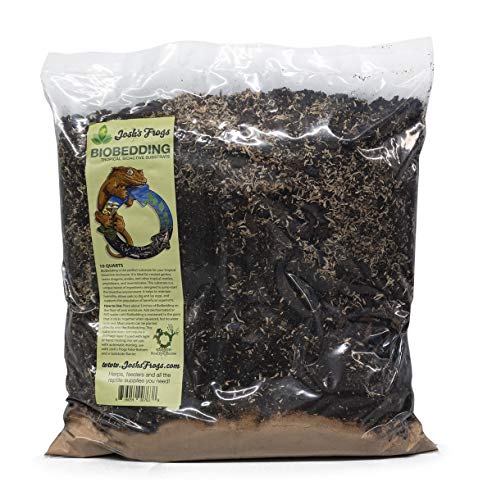
Josh’s Frogs Tropical BioBedding
Best for a plant ready enclosure that only needs a cleanup crew added.
- Type: premixed tropical bioactive substrate
- Best for: crested and gargoyle geckos, chameleons, tropical monitors
- Our depth: 2 to 4 inches so a cleanup crew can establish
Why we pick it
- Blended to hold humidity in the range crested geckos need without staying waterlogged.
- Ready to plant and stock with a cleanup crew the same day it goes into the tank.
Keep in mind
- Costs more per gallon than building a coco fiber and leaf litter mix yourself.

The Bio Dude Terra Fauna
Best for keepers who want to add their own leaf litter, wood, and plants on top.
- Type: premixed tropical bioactive substrate
- Best for: crested and gargoyle geckos, chameleons, tropical skinks
- Our depth: 3 to 4 inches in a bioactive build
Why we pick it
- Built as a tropical bioactive base, so springtails, isopods, and plant roots have something to work in.
- Leaves you free to choose your own leaf litter and wood on top.
Keep in mind
- Still needs a few weeks to cycle before it is ready for a gecko.

Exo Terra Plantation Soil
Best for a humid setup on a smaller budget.
- Type: premixed tropical bioactive substrate
- Best for: tropical geckos, chameleons, tegus, and monitors in humid setups
- Our depth: 2 to 3 inches for an adult crested gecko
Why we pick it
- A moisture holding tropical mix that stays damp between mistings.
- Typically lower cost per bag than full bioactive blends, so it suits a first enclosure.
Keep in mind
- Fluff and lightly moisten it before use so it does not pack down into a dense slab.

Zoo Med Eco Earth Coconut Fiber
Best for keepers who want to build a bioactive mix from scratch.
- Type: coco fiber substrate
- Best for: tropical geckos, juvenile monitors and tegus, hatchling bioactive setups
- Our depth: 2 to 3 inches, deeper once blended with soil
Why we pick it
- Holds humidity well and usually costs less per gallon than premixed bioactive blends.
- Easy to blend with topsoil and leaf litter into a custom bioactive mix.
Keep in mind
- Low in nutrients on its own, so blend it with topsoil or leaf litter for a bioactive tank.

Josh’s Frogs Sphagnum Moss
Best for humid hide pockets and egg laying spots, not as the full floor substrate.
- Type: sphagnum moss
- Best for: humid hide filler, egg laying substrate, temporary humidity spikes
- Use: line hides or press into a corner, keep damp not soggy
Why we pick it
- Holds far more moisture than soil, so it buys hours of extra humidity after misting.
- Simple to swap out during cleaning without disturbing the whole substrate layer.
Keep in mind
- Replace it as soon as it smells sour or grows mold.

Tropical Springtails (Collembola sp.)
Best for keeping a bioactive substrate from turning moldy or smelly.
- Type: cleanup crew, springtail
- Best for: any bioactive setup, tropical and arid adjacent
- Seed time: 2 to 4 weeks before adding the gecko
Why we pick it
- Feeds on mold, waste, and leftover food, which keeps the substrate surface cleaner.
- Pairs well with isopods for a fuller cleanup crew team.
Keep in mind
- Give the culture time to build up before the tank is stocked with a gecko.
| Product | Type | Best for | |
|---|---|---|---|
| Josh’s Frogs Tropical BioBedding | Premixed bioactive substrate | Ready to plant bioactive tanks | View |
| The Bio Dude Terra Fauna | Premixed bioactive substrate | Custom bioactive builds | View |
| Exo Terra Plantation Soil | Premixed bioactive substrate | Budget humid setups | View |
| Zoo Med Eco Earth Coconut Fiber | Coco fiber substrate | Budget DIY bioactive base | View |
| Josh’s Frogs Sphagnum Moss | Sphagnum moss | Humid hides and egg laying spots | View |
| Tropical Springtails | Cleanup crew, springtail | Bioactive maintenance | View |
Setting Up and Maintaining Crested Gecko Substrate
Layer premixed bioactive soil or coco fiber 2 to 4 inches deep in an adult enclosure. Go deeper in a tall bioactive tank, and add a drainage layer underneath.
A drainage layer of expanded clay pebbles or coarse gravel, topped with a mesh barrier, keeps the substrate above it from sitting in standing water. Top the substrate with leaf litter or moss in a few spots to hold extra humidity near hides. See our hide picks for placement ideas.
Check a hygrometer daily and aim for about 60 percent humidity, within the 50 to 80 percent band vets cite, with a brief spike right after misting. A humidifier can smooth out that spike overnight instead of a hand mister alone.
Spot clean waste and shed skin every day if there is no cleanup crew. Once springtails and isopods are established, every few days is enough. A full substrate change without a cleanup crew, using paper towel or coco fiber alone, works well on a 2 to 4 week schedule.
A screen top or mesh lid still needs enough substrate depth below it to hold humidity. Air moves through mesh more freely than through glass, so a mesh top enclosure may need slightly more misting.
Do not tape over vents to compensate. Merck warns that cutting ventilation to hold humidity frequently causes skin and respiratory disease.
Clean non bioactive substrate out with soap and water, which Merck says is generally all that is required. Bleach works if it is rinsed off completely. Phenolic disinfectants are toxic to reptiles.
Soil, sand, and leaf litter collected outdoors should be baked in an oven before use. That step kills parasites and pests that would otherwise ride into the enclosure.
Common Substrate Mistakes to Avoid
Adding a cleanup crew the same week as the gecko is a common mistake. Springtails and isopods need 2 to 4 weeks to build up their numbers first. Otherwise mold and waste can outpace them in a humid tank.
Loose sand marketed as digestible is still risky. A gecko that licks surfaces while hunting can swallow it anyway. Choose a substrate built for tropical geckos instead of one built for desert species.
Letting substrate dry out between mistings undoes the point of choosing a moisture holding material. Check it by hand. It should feel like a wrung out sponge, not dust and not mud.
Soggy substrate is the opposite mistake and the more dangerous one. Moist, contaminated bedding lets bacteria and fungi grow. Merck names Aeromonas and Pseudomonas as the usual culprits behind scale rot on a lizard’s belly.
A drainage layer and a cleanup crew are the fix, not less misting.
Piling substrate too shallow in a bioactive tank is another common error. A cleanup crew needs room to burrow, feed, and reproduce. Two inches is a practical floor even in a smaller enclosure.
Mixing in decor that traps standing water against the substrate is a quieter mistake. Water dishes and drip areas belong over the drainage layer or on a raised platform, not directly on top of soil that already holds plenty of moisture.
Reusing old substrate from a sick gecko’s enclosure is a mistake worth naming on its own. Parasites and bacteria can survive in soil and coco fiber even after a rinse. Start any new or recovering gecko on fresh, clean material instead of carrying old substrate forward between different tanks and enclosures.
Frequently Asked Questions
What is the best substrate for crested geckos?
The best substrate for crested geckos is a premixed tropical bioactive soil or a coco fiber blend. It holds humidity near the 60 percent mark and will not cause a blockage if swallowed. Paper towel works as a short term option for hatchlings or quarantine, though it dries out fast.
How deep should the substrate be in a crested gecko enclosure?
Plan on 2 to 3 inches for a simple setup. A bioactive tank needs 3 to 4 inches to leave room for a cleanup crew and plant roots. A deeper layer also buys more time between mistings before the surface feels dry.
Can I use only coco fiber for a crested gecko tank?
Coco fiber alone works, but it holds fewer nutrients than a bioactive blend. Plants grow more slowly in it. Many keepers mix in leaf litter or a handful of topsoil so a cleanup crew has more to eat.
Do crested geckos need a cleanup crew?
A cleanup crew is optional, not required. Without one, plan on spot cleaning waste daily. A full substrate change every 2 to 4 weeks takes the place of a bioactive team handling it.
Is sand ever safe for a crested gecko?
No reputable source recommends sand for crested geckos, including calcium sand sold as digestible. It can be ingested while the gecko hunts insects, causing a blockage that needs veterinary treatment.
Do crested geckos need a special substrate for laying eggs?
Wild females dig a hole a few inches deep in moist soil to lay their eggs. Each clutch holds 2 eggs, produced roughly every 4 to 6 weeks. A deep pocket of damp coco fiber or moss gives a laying female a similar spot to use.
Sources
- Animal Diversity Web: Rhacodactylus ciliatus. https://animaldiversity.org/accounts/Rhacodactylus_ciliatus/
- Warren Woods Veterinary Hospital: Crested Gecko Care and Husbandry. https://www.wwvhcares.com/crested-gecko-care-and-husbandry
- Long Island Bird and Exotics Veterinary Clinic: Crested Gecko Care Guide. https://www.birdexoticsvet.com/crested-gecko-care-guide
- Merck Veterinary Manual: Management and Husbandry of Reptiles. https://www.merckvetmanual.com/exotic-and-laboratory-animals/reptiles/management-and-husbandry-of-reptiles
- Merck Veterinary Manual: Bacterial Diseases of Reptiles. https://www.merckvetmanual.com/exotic-and-laboratory-animals/reptiles/bacterial-diseases-of-reptiles