Explore all 23 supporting guides
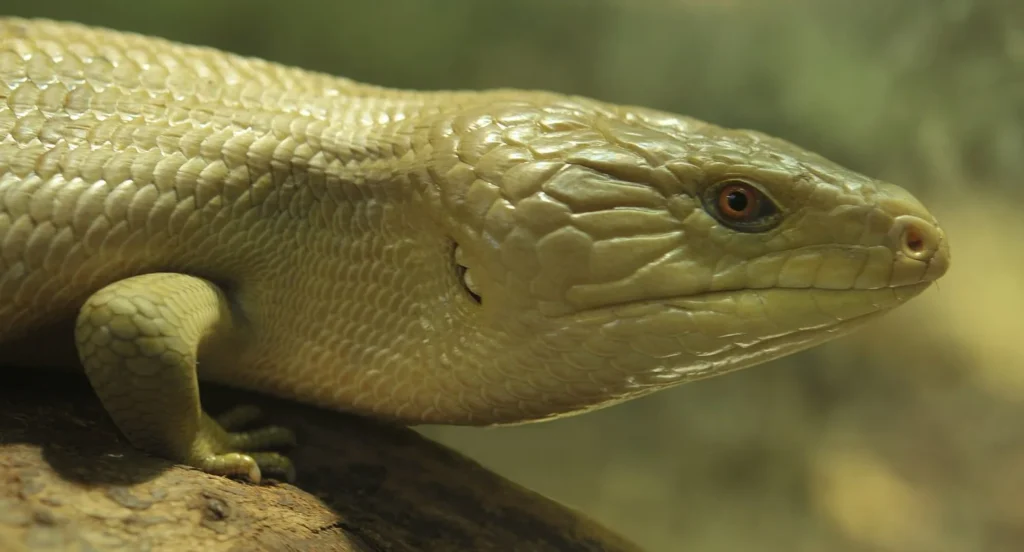
The blue tongue skink is a heavy bodied lizard with short legs and a bright blue tongue. It flashes that tongue when startled. It belongs to the genus Tiliqua, part of the wider skink family.
The common blue tongue skink usually means Tiliqua scincoides. That includes the eastern and northern forms from Australia, plus a related Indonesian population. It is one of the most popular pet lizards in the world, and one of the most recognizable thanks to that tongue.
It tolerates handling well. It eats a varied diet. It stays calm once it settles into a routine.
At a glance: Adult blue tongue skinks reach 18 to 24 inches long. They can live 15 to 20 years or more with good care.
They need a floor space enclosure of at least 4 feet by 2 feet. A basking spot near 95 to 100 F, such as one from a Zoo Med Repti Halogen Basking Spot Lamp, and full spectrum UVB are both required.
They are omnivores that eat leafy greens, vegetables, and lean protein. Adults are usually kept alone.
As an Amazon Associate, Lizardist earns from qualifying purchases. Some product links on this page are affiliate links.
Wild blue tongue skinks range across eastern, southeastern and northern Australia, avoiding only the arid interior. They live in coastal heath, woodland, grassland and montane forest, and they turn up regularly in suburban gardens. The Tanimbar form lives on islands in eastern Indonesia.
The genus Tiliqua includes several other large, heavy bodied skinks that share a similar body plan and a similarly broad diet. The shingleback skink and the pink tongued skink are two well known relatives, each with its own distinct look and care needs. Understanding where the blue tongue skink fits within that genus helps explain why care sheets sometimes mix up requirements between species.
Blue Tongue Skink Care Overview
Blue tongue skink care centers on a few essentials. A spacious floor level enclosure and a strong temperature gradient come first. Real UVB light and a varied omnivore diet round out the basics.
These lizards are ground dwellers. They walk and dig rather than climb. A wide low enclosure suits them better than a tall one.
They tend to move slowly. They are food motivated. Most tolerate gentle handling once they know their keeper.
New keepers sometimes underestimate adult floor space needs. A skink that starts at 6 inches can reach 2 feet within a couple of years. Skimping on UVB or calcium is the most common long term mistake.
Poor lighting or calcium leads to metabolic bone disease over months, not days. Keepers who set up a full sized adult enclosure from the start avoid most later problems. Good lighting from day one matters more than almost anything else.
Blue tongue skinks suit a first time keeper who has researched the setup in advance. They are not delicate the way some tropical species are. They still need consistent heat, real UVB, and a proper diet.
A keeper who gets those basics right usually finds this species easy to keep long term. Anyone still deciding between species can compare options on our guide to choosing a pet lizard.
Enclosure Setup
An adult blue tongue skink needs a floor footprint of about 4 feet by 2 feet at minimum. Veterinary references give a 40 to 55 gallon tank as the absolute minimum, but most keepers now favor the larger 4 by 2 foot footprint. Larger is always better.
These skinks are ground dwelling. They can grow to 2 feet long. Height matters far less than floor space for this species.
Many keepers build or buy low, wide enclosures. Tall glass terrariums made for arboreal species do not suit them well. Floor space is the priority.
A substrate that holds a little moisture works best. It lets the skink dig. It also helps maintain humidity.
Cypress mulch, coconut fiber blends, or a soil and sand mix are common choices. Spread it at least 3 to 4 inches deep. That depth lets the animal burrow.
Avoid loose substrates that clump badly if swallowed. Offer food on a flat dish or tile instead of directly on substrate. This lowers the risk of accidental ingestion.
Furnish the enclosure with two hides, one warm and one cool. Add a shallow water dish large enough to soak in. A humid hide with damp sphagnum moss helps during shedding.
Solid branches, cork bark, or flat rocks give the skink texture to move across. Full climbing structures are not needed for this ground dwelling species. Our general lizard housing guide covers substrate and enclosure basics.
| Enclosure feature | Recommendation |
|---|---|
| Minimum floor size, single adult | 48 in x 24 in (4 ft x 2 ft) |
| Substrate depth | 3 to 4 inches, diggable and slightly moist |
| Water dish | Shallow, large enough to soak in, cleaned daily |
| Hides | At least two, one on each end of the thermal gradient |
| Housing multiple skinks | Not recommended for adults, since they are territorial |
Heating and Lighting
A blue tongue skink needs a strong basking spot. It also needs a real cool zone to retreat to. Aim for a basking surface near 95 to 100 F.
The warm side ambient temperature should sit near 85 F. The cool end should drop to 75 to 80 F. Nighttime temperatures can fall into the low 70s without extra heat.
Full spectrum UVB lighting is not optional for this species. A T5 high output UVB tube should span most of the enclosure length. Pair it with a basking bulb over a solid surface.
This setup lets the skink self regulate its UVB exposure, much like it would in natural sunlight. Replace UVB bulbs on the manufacturer’s schedule, usually every 6 to 12 months. Output fades well before the bulb stops lighting up.
Ambient humidity should sit around 30 to 40%. That is higher than a desert setup but far short of a rainforest terrarium. A humid hide handles shedding needs without pushing the whole enclosure too damp.
Run lighting on a 12 hour on, 12 hour off cycle. This mimics a natural day length. Use a digital thermometer and hygrometer rather than the dial gauges bundled with many starter kits, since those are often inaccurate.
What Blue Tongue Skinks Eat
Blue tongue skinks are true omnivores. In the wild they eat flowers, native fruit, berries, and fungi. They also eat snails, insects, and carrion.
Their rear teeth are specialized to crush snail shells. That trait sets them apart from many other skink species. Captive care aims to mirror that mixed diet.
A workable adult diet runs roughly 40 to 50% vegetables and leafy greens. Another 40 to 50% should be animal protein. The small remainder can be fruit offered as an occasional treat.
Good greens include collard greens, dandelion greens, mustard greens, and squash. Suitable protein includes gut loaded insects and cooked lean meat. Low fat canned dog or cat food can be used sparingly, not as a staple.
Older care sheets recommended dog food as a daily base. Many keepers and vets now treat that as an outdated shortcut. Our lizard feeding guide covers building a balanced omnivore diet.
Dust insects and other protein with a calcium supplement, such as Zoo Med Repti Calcium without D3, at most feedings. Add a vitamin D3 supplement if the enclosure lacks adequate UVB. Feed juveniles daily and adults every 1 to 2 days.
Adjust portion size to keep the skink from gaining excess weight. Fresh water should be available at all times. Use a dish large enough for the skink to soak in.
Common Health Issues
Blue tongue skinks are considered a hardy species. They are not immune to husbandry related illness, though. Metabolic bone disease is the most common serious problem.
It comes from inadequate UVB or calcium. It shows up as soft jaw bones, tremors, or trouble walking. It is also one of the most preventable problems with consistent care from the start.
Obesity is common in captivity. It shows up most in skinks fed too much fruit or fatty protein with little room to move. Portion control matters as much as ingredient choice.
Respiratory infections can develop in enclosures that run too cool or too damp. Watch for wheezing, mucus around the nose, or lethargy. Retained shed around the toes and tail tip points to a humidity or hide problem.
A soak in shallow warm water often helps loosen stuck shed. Do this before it constricts circulation to a toe or the tail tip. Regular humid hide access usually prevents the problem in the first place.
Bite wounds are a real risk when two blue tongue skinks share an enclosure. Adults are territorial and can injure each other badly during a dispute. This is one reason solo housing is the standard for adults.
Any wound, swelling, sudden weight change, or appetite loss lasting more than a few days deserves a vet visit. A reptile vet can confirm whether tongue color, stool, or behavior reflects a real problem. Our lizard health guide covers general warning signs worth knowing.
Behavior and Temperament
Blue tongue skinks are diurnal. They are active during the day and sleep at night. They spend most of their time on the ground.
They move with a slow, deliberate walk. This differs from the quick darting motion typical of many smaller lizards. In the wild they shelter under logs, leaf litter, and garden debris between active periods.
Their signature defense display gives the species its name. When threatened, a blue tongue skink gapes its mouth and sticks out its wide blue tongue. It also puffs up its body and hisses loudly.
The sudden flash of blue against a pink mouth works as a startle display that gives a predator pause. In a calm captive setting the display rarely escalates further.
Individual temperament varies. Most captive bred blue tongue skinks become food motivated within a few weeks of settling in. Most also tolerate gentle handling reasonably well.
They can still drop their tails if grabbed or badly startled, a defense called autotomy. The tail grows back only partially. It never matches the original.
Adults are solitary by nature. They should be housed alone rather than in pairs or groups. That solitary streak is common across the skink family, including relatives like the red eyed crocodile skink.
Breeding
Blue tongue skinks give birth to live young rather than laying eggs. Scientists call this reproductive strategy ovoviviparity. Females typically reach sexual maturity around 2 to 3 years old.
Breeding in captivity usually follows a cooling period. Some keepers call this brumation, or simply a winter cooldown. It mimics the seasonal temperature drop the species experiences in the wild.
After mating, gestation lasts roughly 3 to 4 months. Litter size commonly falls between 10 and 15 young. Litters as large as 25 have been documented.
Neonates measure about 90 to 130 millimeters snout to vent length. They weigh between 8 and 21 grams at birth. They are fully independent from the moment they are born.
Breeding blue tongue skinks is a serious undertaking. It involves careful weight tracking and a properly timed cooling cycle. Keepers need enough spare enclosures to raise a full litter separately.
It is not a project to start casually. Most pet keepers are better served focusing on care rather than reproduction. Anyone considering it should be ready to house and rehome every offspring responsibly.
Lifespan and Size
Adult blue tongue skinks typically reach 18 to 24 inches in total length. The tail makes up roughly half to three quarters of that measurement. Size varies by subspecies and by individual.
Wild eastern blue tongue skinks average around 300 to 320 millimeters snout to vent length. A documented maximum total length sits near 600 millimeters. A healthy adult can fall outside those averages either way.
Lifespan is one area where sources genuinely disagree. Veterinary sources and modern zoo records commonly cite about 20 years in managed care. Many keepers report skinks living well past that with consistent husbandry.
An older academic survey found a lower average captive lifespan, closer to 14 years. That figure likely reflects outdated husbandry practices from earlier decades. It probably understates the species’ true potential today.
A blue tongue skink kept on a proper UVB and heat setup has a realistic shot at 15 to 20 years or longer. That is a genuine long term commitment. It is closer to owning a dog than a short lived pet.
Anyone considering this species should plan for the full lifespan. Do not plan around the low end of the range. Regular checkups with a reptile vet help protect that lifespan.
Blue Tongue Skink Types and Morphs
Blue tongue skinks are not sold under a large catalog of standardized genetic morphs. This differs from leopard geckos or ball pythons. Most trade variation comes from locality and subspecies, not bred color mutations.
The common blue tongue skink has three recognized subspecies: the eastern blue tongue skink, the northern blue tongue skink, and the Tanimbar or Indonesian blue tongue skink. Each has a slightly different natural range and look.
The wider pet trade also uses “blue tongue skink” loosely for related species in the genus Tiliqua. That includes the Kei Island blue tongue skink, the Irian Jaya blue tongue skink, and the Merauke blue tongue skink. These are separate species or subspecies from Tiliqua scincoides.
Some breeders offer hypomelanistic, axanthic, or patternless lines. These are sometimes marketed as high orange or high red animals. Documentation on these color lines is thinner than for morphs in other popular reptile species, so treat breeder genetic claims with some caution.
It helps to confirm the exact species or subspecies before buying. Care requirements and adult size can hinge on that detail. A reputable breeder should be able to state the scientific name and locality of any animal they sell.
Our full skink group guide compares this species against smaller relatives. That includes the blue tailed skink and the five lined skink. Both suit keepers who want a smaller, faster animal.
Cost of Owning a Blue Tongue Skink
The blue tongue skink itself is usually the smaller expense. Common eastern and northern forms tend to sell for less than rarer Indonesian species or bred color lines. Prices vary widely by breeder, locality, and region.
Buyers should expect a modest purchase price relative to setup costs. The bigger cost driver is the enclosure itself. A floor space of 4 feet by 2 feet or larger costs considerably more than a small gecko sized tank, especially once a solid, low sided enclosure and a secure lid are factored in.
A T5 high output UVB fixture adds to the initial cost. So does a quality basking bulb and fixture, a thermostat, and digital thermometers and hygrometers. These items form the bulk of a first time setup budget.
Ongoing costs include electricity for heating and lighting. UVB bulbs need replacing every 6 to 12 months. Substrate, food, and occasional veterinary care add to that total.
Over a 15 to 20 year lifespan, running costs add up to more than the animal’s purchase price. Anyone budgeting for a blue tongue skink should plan for the full setup cost up front. Our lizard gear guide breaks down equipment costs for a first setup.
Veterinary care for an illness like metabolic bone disease can also be a meaningful unplanned expense. Building an emergency fund alongside the setup budget is a smart habit. Good husbandry from the start keeps that expense rare.
Frequently Asked Questions
Are blue tongue skinks good pets for beginners?
Yes, blue tongue skinks suit a first time lizard keeper who has researched the setup in advance. They tolerate handling, eat a varied diet, and are hardier than many tropical species. The main requirement is a large enough enclosure and real UVB lighting from the start.
How big of an enclosure does a blue tongue skink need?
An adult needs a minimum floor footprint of about 4 feet by 2 feet. These lizards are ground dwelling and use floor space rather than height. A small juvenile can start smaller, but expect to upgrade within the first year or two.
Can you house two blue tongue skinks together?
Adults are territorial and are usually kept alone. Housing two together risks serious bite wounds during disputes over space or food. A single, spacious enclosure per adult skink is the safer standard.
What do blue tongue skinks eat?
They are omnivores that need a mix of leafy greens, vegetables, and animal protein. Insects and lean meat cover the protein side, with occasional fruit as a treat. Calcium supplementation matters at most feedings.
How long do blue tongue skinks live?
Most veterinary and zoo sources cite roughly 20 years in managed care with consistent husbandry. Some older studies reported a lower average closer to 14 years. A well cared for pet today has a realistic chance at 15 to 20 years or more.
Do blue tongue skinks need UVB lighting?
Yes, full spectrum UVB is essential for normal calcium metabolism in this species. Without it, skinks face a real risk of metabolic bone disease over time. A T5 high output UVB tube spanning most of the enclosure is standard.
Sources
- San Diego Zoo Wildlife Alliance: Eastern Blue Tongued Skink Fact Sheet. https://ielc.libguides.com/sdzg/factsheets/eastern-blue-tongued-skink
- LafeberVet: Basic Information Sheet for the Northern Blue Tongued Skink. https://lafeber.com/vet/basic-information-for-the-northern-blue-tongued-skink/
- LafeberVet: Care of the Blue Tongued Skink. https://lafeber.com/vet/blue-tongued-skink/
- Animal Diversity Web, University of Michigan: Tiliqua scincoides. https://animaldiversity.org/accounts/Tiliqua_scincoides/
- The Reptile Database: Tiliqua scincoides (White, 1790). https://reptile-database.reptarium.cz/Tiliqua/scincoides