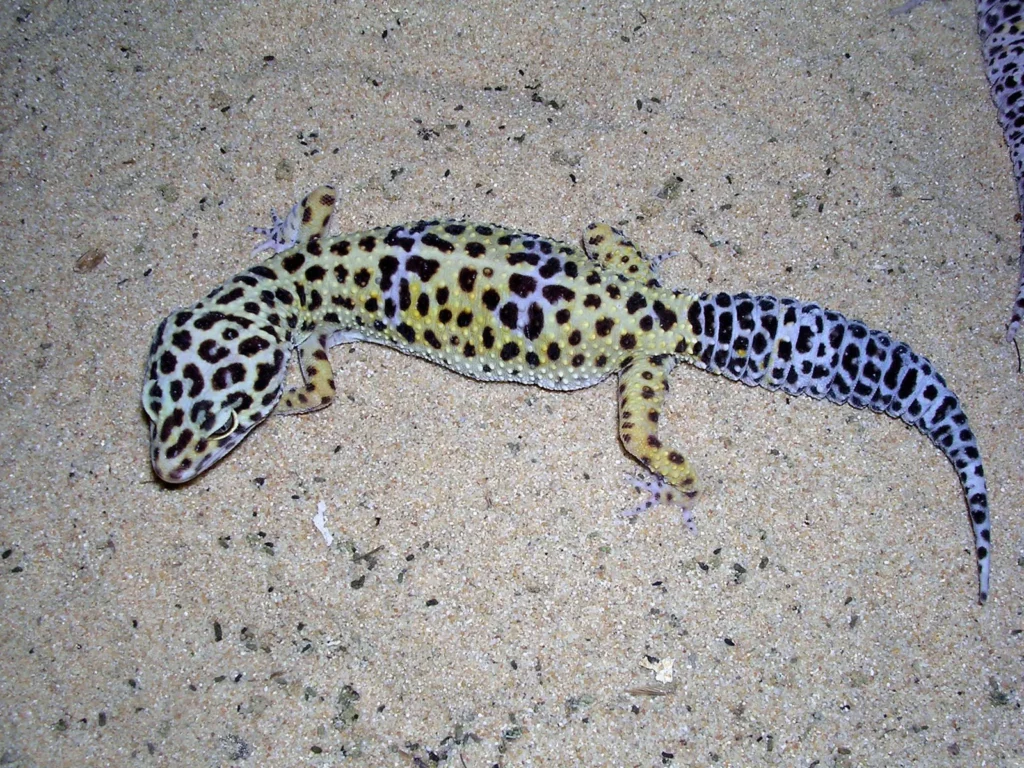
Reptile morph genetics explains why two normal looking parents can produce a strikingly different offspring. It also explains why two morphs bred together sometimes make something neither parent shows. A handful of inheritance rules cover almost every pattern, color, and texture trait kept in the hobby today.
At a glance: Reptile morphs follow four inheritance patterns (recessive, dominant, incomplete dominant or codominant, and polygenic), and a Punnett square predicts the odds of each one in a clutch.
What a Morph Is at the Genetic Level
A morph is a heritable change in color, pattern, or scale texture. It comes from a mutation at one gene, or sometimes a few genes. That mutation copies into DNA and passes down like any other trait.
Some morphs change pigment cells called melanophores, xanthophores, and iridophores. These control black, yellow, and shine. Other morphs change how scales form, as with leatherback bearded dragons.
The Four Ways Reptile Genes Are Inherited
Every gene in reptile morph genetics falls into one of four categories. The category decides how many gene copies an animal needs to show a trait. It also decides what a breeder can expect from any given pairing.
Recessive Traits
A recessive gene stays hidden unless an animal inherits two copies. One copy alone looks completely normal. That carrier animal can still pass the gene to its own offspring.
Tremper albino, Blizzard, and Eclipse are recessive traits in the leopard gecko. Most ball python albino lines are recessive too. Two visual recessive parents always produce 100 percent visual offspring.
Dominant and Incomplete Dominant Traits
A dominant gene shows up with just one copy. Enigma in leopard geckos is one example. Pairing a single copy dominant animal to a normal animal produces roughly half visual offspring, with no hidden carriers involved.
An incomplete dominant gene also shows with one copy. A single copy and a double copy look different from each other. Bearded dragon leatherback works this way, since one copy softens scale texture and two copies remove it almost entirely.
Codominant Traits
A codominant gene behaves much like an incomplete dominant one in practice. Hobbyists often use the two terms loosely and interchangeably. Technically, codominant means both alleles show side by side, while incomplete dominance blends into a true middle look.
Pastel in ball pythons is usually filed under incomplete dominant for this reason. Some breeders still call it co dominant out of habit. The practical breeding math works out the same either way.
Polygenic Traits
Polygenic traits come from several genes working together. There is no single on or off switch. High contrast leopard gecko lines and extreme bearded dragon colors are both polygenic and line bred.
These traits cannot be mapped on a simple Punnett square. Selective breeding shifts the odds gradually across many generations. Percentages of offspring meeting a visual goal, not clean ratios, are the useful measure here.
A breeder chasing a polygenic goal, such as darker base color or heavier pattern reduction, keeps notes on every clutch. Each generation, the strongest examples are paired forward while weaker ones are set aside. Over five or six generations that gradual selection can shift a whole line’s average appearance noticeably.
What Het Means in Reptile Genetics
Het is short for heterozygous. It means an animal carries one copy of a recessive gene without showing it. A het animal looks completely normal for its species.
Pair two hets of the same gene and about half of their offspring will carry a hidden copy. Het status only applies to recessive genes. Dominant and incomplete dominant genes always show whenever they are present.
Breeders write het status in shorthand, such as “het albino” or “100 percent het Tremper.” Proving het status usually needs a known parent lineage. A test breeding that produces a visual offspring can also confirm it.
Possible Het and Percentages
A possible het is an animal with only a statistical chance of carrying a recessive gene. That percentage comes straight from the Punnett square of its parents. Pairing two hets together makes two out of every three normal looking offspring possible hets, or 66 percent.
Possible het animals sell for less than proven hets. The uncertainty carries real financial risk into future breeding plans. A test cross to a known visual animal can convert a possible het into a proven one.
Reading a Punnett Square
A Punnett square is a simple grid. It lines up the two alleles from one parent against the two alleles from the other. Each of the four boxes shows one possible combination, and each combination is equally likely.
Leopard Gecko Example: Recessive by Recessive
Pairing a het Tremper albino gecko with another het Tremper albino produces a classic 1:2:1 ratio. One quarter of the clutch will be visual Tremper albino. Half will be het carriers, and the last quarter will carry no copies at all.
The math stays the same whether the gene is Tremper, Rainwater, or Bell albino. These are separate recessive alleles at different locations. Crossing two different albino types together produces only normal looking offspring, het for both genes, which surprises many new breeders.
Bearded Dragon Example: Incomplete Dominant by Incomplete Dominant
Pairing two leatherback bearded dragons, each with one gene copy, produces three outcomes instead of two. One quarter will be normal scaled with no copies. Half will be single copy leatherbacks like their parents.
The final quarter will be double copy silkbacks. This is the same 1:2:1 ratio as the gecko cross above. Incomplete dominance simply turns the hidden and carrier categories into two separate visible looks.
Common Pairings and Their Odds
The two worked examples above cover the classic crosses. The table below extends them to the pairings breeders actually run most often. Every percentage is a per egg probability, so a clutch of eight eggs can easily miss the expected split.
| Pairing | Expected offspring | Sold as |
|---|---|---|
| Recessive: het x normal | 50% het, 50% normal, all look normal | All offspring are 50% possible het |
| Recessive: het x het | 25% visual, 50% het, 25% normal | Normal looking offspring are 66% possible het |
| Recessive: visual x het | 50% visual, 50% het | Normal looking offspring are 100% het |
| Recessive: visual x visual | 100% visual | Visual |
| Incomplete dominant: single copy x normal | 50% single copy, 50% normal | No hidden carriers, visual or not |
| Incomplete dominant: single copy x single copy | 25% super, 50% single copy, 25% normal | The only route to a super form |
| Incomplete dominant: super x normal | 100% single copy | The reason supers are prized as breeders |
| Two different recessives: visual A x visual B | 100% normal looking, all double het | 100% het for both genes |
Two genes at different locations sort independently, so multiply the odds. A gecko that is het albino and het eclipse paired to a matching double het gives a 1 in 16 chance of an offspring showing both traits. That arithmetic is why multi gene projects take several generations and many clutches.
Super Forms Explained
A super form is the double copy version of an incomplete dominant or codominant gene. Super Pastel in ball pythons and Super Snow in leopard geckos both fit this pattern. The word super always means two copies of one gene, not two different genes combined.
Not every super form looks appealing or breeds without issue. Some produce reduced pattern that collectors want. Others come with health complications that responsible breeders avoid pairing for on purpose.
Line Breeding and Its Risks
Line breeding means pairing related animals to fix a polygenic trait or intensify a pattern. A line bred animal with solid ancestry records commands a higher price. Buyers trust the trait will reproduce reliably in future clutches.
The tradeoff is a shrinking gene pool. Repeated pairing of relatives raises the odds of unrelated recessive defects appearing by accident. Careful breeders track pedigrees and bring in outside bloodlines on a regular schedule.
Keeping Track of Genetics in a Breeding Project
Serious breeders keep written records for every animal in a project. A spreadsheet listing parents, hatch dates, and known or possible het status prevents accidental repeat pairings years later. Photo records at hatching also help confirm a visual outcome matched the Punnett square prediction.
DNA testing exists for only a small number of reptile morph genes, mostly in ball pythons. For most leopard gecko and bearded dragon traits, breeders still rely on pedigree records and test crosses rather than a lab result. That makes accurate record keeping the single most valuable tool in reptile morph genetics.
Lethal and Welfare Linked Genes
A small number of morph genes carry documented health or welfare problems. Every breeder should know them before combining genes blindly. These fall into two groups: genes lethal in double copy, and genes linked to neurological symptoms in a single copy.
Spider and Wobble Syndrome
Spider is a dominant ball python gene that produces a reduced, web like pattern. A 2014 study in the Journal of Veterinary Behavior by Rose and Williams surveyed breeders about the head tremors, corkscrewing, and poor coordination seen in spider morphs. Every breeder who answered knew the condition, and expert opinion ranged from “a minority are severely affected” to “all are affected.”
The authors found clear potential for significant welfare compromise from selective breeding of reptiles. Because the wobble travels with the gene itself and not with a double dose, pairing spider to a normal animal cannot remove the risk from the visual offspring. Several European countries and some reptile shows now restrict the sale or display of spider pythons for this reason.
Lemon Frost Leopard Geckos
Lemon Frost is the clearest case of a morph gene that is also a disease gene. The trait appeared as a spontaneous mutation in a hatchling from two normal parents, and a California breeder began producing it in 2016. A 2021 study in PLOS Genetics traced it to a mutation in SPINT1, a tumor suppressor gene.
The gene is semidominant. One copy gives the bright white and yellow look, and two copies give a super Lemon Frost with thickened skin. More than 80 percent of geckos carrying the allele developed white skin tumors called iridophoromas between 6 months and 5 years of age, and super forms showed larger tumors with spread to the liver, eye, and muscle.
No amount of outcrossing removes the tumor risk, because the same allele causes both the color and the cancer. Responsible breeders have dropped the line entirely. Anyone offered a Lemon Frost should treat the tumors as expected, not as bad luck.
Enigma Syndrome in Leopard Geckos
Enigma is a dominant leopard gecko trait, first produced by breeders Mark and Kim Bell in 2006. It is prized for a speckled, high contrast look. A subset of Enigma geckos develop what keepers call Enigma syndrome.
Symptoms include head tilting, disorientation, and repetitive circling or star gazing behavior. They range from barely noticeable to severe enough to affect feeding. Some breeders report that combining Enigma with certain other genes raises symptom frequency and severity.
There is no reliable test for which individual Enigma animals will develop symptoms. Many breeders now pair Enigma cautiously or avoid stacking it with genes known to interact poorly. A reptile veterinarian can help assess an affected animal’s quality of life, and general warning signs are listed in the lizard health guide.
Silkback Bearded Dragons
The double copy leatherback combination above, called silkback, is not lethal but carries its own welfare cost. Without functional scales, these dragons lose protection against sunburn, abrasion, and moisture loss. They need modified husbandry for their entire lives.
Many experienced keepers see deliberately producing silkbacks as an ethical concern rather than a breeding goal. The bearded dragon breeding guide and the bearded dragon morph guide cover this tradeoff in more depth. Baseline care for any bearded dragon, morph or not, starts with the bearded dragon care sheet.
Frequently Asked Questions
What is the difference between a het and a possible het?
A het is confirmed through a known parent or a proven test breeding. A possible het only has a statistical chance based on its parents’ genetics. Sellers should always state which category an animal falls into.
Can two different recessive morphs combine in one animal?
Yes, as long as each gene sits at a different location. An animal can carry several recessive genes at once and eventually show all of them. Each gene still follows its own separate Punnett square within the same clutch.
Why do two normal looking parents sometimes produce a morph?
This happens when both parents are het for the same recessive gene without showing it. Their normal appearance hides a copy that only becomes visible when two matching copies land in one offspring. It is one of the most common surprises in reptile morph genetics.
Is line breeding the same as inbreeding?
Line breeding is a controlled, deliberate pairing of related animals to fix a trait. Inbreeding as a general term usually implies unmanaged, repeated close pairing. Careless pairing without pedigree tracking raises the risk of unrelated genetic defects.
Are all morph combinations safe to breed?
Not all of them. Lemon Frost leopard geckos carry a tumor gene and spider ball pythons carry a neurological wobble, and both travel with a single copy, so no pairing makes them safe. Other genes are lethal only in double copy and are managed by never pairing two carriers, and an experienced breeder or reptile veterinarian can advise on genes with documented problems.
Do polygenic traits ever become predictable?
They become more predictable over many generations of consistent line breeding toward one visual goal. They never reduce to a clean Punnett square ratio the way single gene traits do. Breeders instead track percentages of offspring meeting a standard across each generation.
Sources
- National Library of Medicine, MedlinePlus Genetics: What are the different ways a genetic condition can be inherited? https://medlineplus.gov/genetics/understanding/inheritance/inheritancepatterns/
- Journal of Veterinary Behavior (Rose and Williams 2014): Neurological dysfunction in a ball python (Python regius) color morph and implications for welfare. https://www.sciencedirect.com/science/article/abs/pii/S1557506314000962
- PLOS Genetics (Guo et al. 2021): Genetics of white color and iridophoroma in “Lemon Frost” leopard geckos. https://journals.plos.org/plosgenetics/article?id=10.1371/journal.pgen.1009580
- ScienceDaily, from a UCLA news release: Leopard gecko skin tumors traced to cancer gene. https://www.sciencedaily.com/releases/2021/06/210624141556.htm