Explore all 14 supporting guides
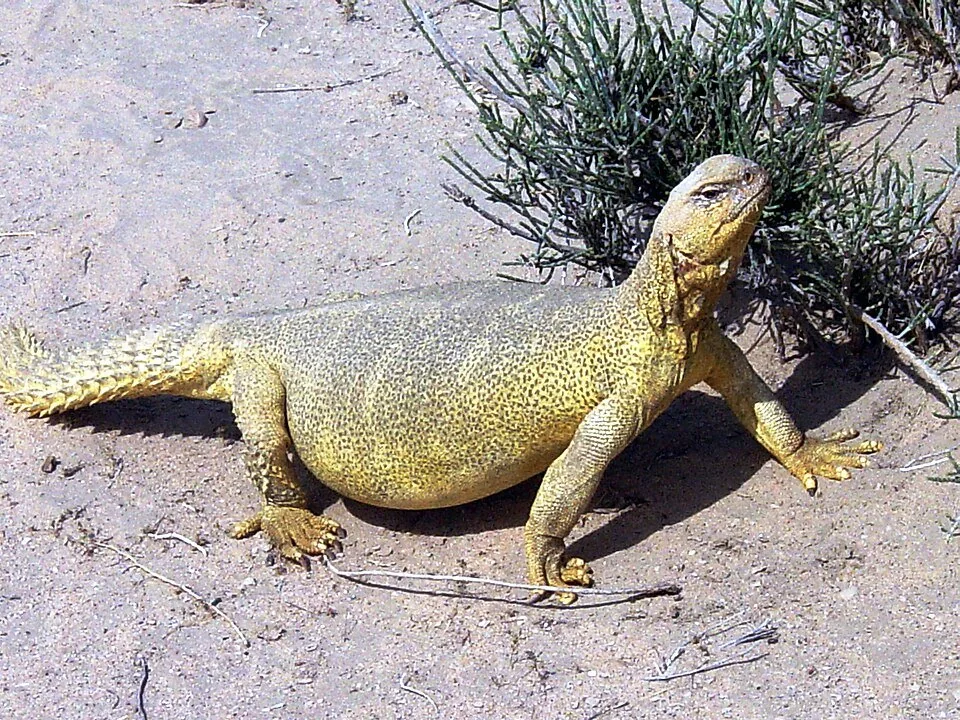
Uromastyx are chunky, spike tailed, plant eating lizards. They are built for life in some of the hottest deserts on Earth. Sources differ slightly on the exact species count.
The wildlife trade group TRAFFIC cites about 20 species, while some taxonomic databases list closer to 16. Every source agrees the genus spans North Africa, the Middle East and northwestern India.
Anyone shopping for a uromastyx quickly discovers the name covers a lot of ground. It runs from small, dull colored burrowers to some of the most vividly patterned lizards kept as pets today.
At a glance: Uromastyx are herbivorous, burrow dependent desert agamids from Africa, the Middle East and South Asia.
Adult size ranges from about 10 inches in the smallest species to over 2 feet in the Egyptian uromastyx.
Captive lifespan commonly runs 15 to 20 plus years, and the whole genus is CITES Appendix II protected.
What Is a Uromastyx?
Uromastyx is a genus in the agamid family. It is related distantly to bearded dragons, but built very differently. Their bodies are flattened and armored with small spiny scales.
The tail carries thick rings of spikes. That spiked tail gives the genus its name and its main defense. When threatened, a uromastyx wedges into a burrow and whips its tail at whatever is trying to pull it out. Our uromastyx bite and defense guide covers this in more depth.
Every uromastyx species digs or occupies a burrow system. That burrow is the center of its life, not a backup shelter. Surface temperatures in their native range swing from below freezing to over 130 degrees Fahrenheit.
A few feet down, the burrow stays close to a stable 68 to 77 degrees. Uromastyx retreat underground overnight and, in some populations, during the hottest midday hours. Most also spend several months in winter dormancy, and many aestivate during droughts. Our uromastyx habitat guide covers burrow needs in more depth.
Diet sets the genus apart from most popular pet lizards. Uromastyx are strongly herbivorous as adults. They graze on desert grasses, seeds and salt tolerant shrubs.
Juveniles take more insects before shifting toward plants as they grow. Specialized nasal glands let them excrete excess salt from their diet without losing water. That adaptation has been studied directly in the Saharan species Uromastix acanthinurus, and it suits life in places with almost no standing water for months at a time.
Types of Uromastyx: Main Species
Hobbyists usually sort uromastyx species by color and size, not strict taxonomy. Coloration is what draws most keepers in. These five species are the ones most commonly seen in the pet trade and covered in detail on this site.
Ornate Uromastyx
The ornate uromastyx is one of the most brightly colored members of the genus. It carries turquoise, yellow and orange markings over a darker base. It comes from the Sinai Peninsula and parts of the Arabian Peninsula.
This species stays on the smaller side of the genus. That makes it popular with keepers who want striking color without a huge enclosure footprint.
Egyptian Uromastyx
The Egyptian uromastyx is the giant of the group. Adults regularly exceed 2 feet including the tail. Its coloration tends toward muted tans, olive and gray rather than bright pattern.
Its sheer size means it needs the largest enclosure footprint of any commonly kept uromastyx. It suits keepers with real floor space to spare.
Saharan Uromastyx
The Saharan uromastyx comes from the Sahara’s rocky and sandy edges. This common name is often used for smaller, hardy desert dwelling forms. It is a mid sized species.
Many keepers pick it as a classic, manageable uromastyx. It avoids the size demands of the Egyptian species while staying easy to find.
Ocellated Uromastyx
The ocellated uromastyx gets its name from the eye like spots across its back. Those spots sit against a warm, often orange tinted body. It occupies rocky habitat in parts of the Horn of Africa region.
It is a moderately sized species. Keepers often describe it as bold and alert compared to other uromastyx.
Uromastyx Dispar
Uromastyx dispar covers a group of closely related forms. In the trade these are sometimes labeled Mali or Eastern uromastyx. They tend toward warm yellow and rust coloring with a stockier build.
They are a common entry point species. Their relative availability and moderate size make them approachable for newer keepers.
Uromastyx Species Comparison
| Species | Adult Size | Native Range | Typical Coloring |
|---|---|---|---|
| Ornate uromastyx | Around 12 to 14 in | Sinai and Arabian Peninsula | Turquoise, yellow, orange |
| Egyptian uromastyx | Up to about 30 in | Egypt, Levant, Arabian Peninsula | Tan, olive, gray |
| Saharan uromastyx | Around 10 to 14 in | Sahara, North Africa | Sandy tan to yellow |
| Ocellated uromastyx | Around 12 to 15 in | Horn of Africa region | Orange with dark spots |
| Uromastyx dispar | Around 12 to 16 in | Mali, West and North Africa | Yellow, rust, brown |
How Uromastyx Species Care Differs
The core husbandry recipe stays the same across every uromastyx species. Every one needs deep dry substrate for burrowing, a hot basking zone, strong UVB and an herbivore diet.
What changes between species is scale. The Egyptian uromastyx needs an enclosure that counts as an adult sized cage, not a large terrarium. It often runs 6 feet or more in length simply because of the animal’s bulk.
Smaller species like the ornate uromastyx can thrive in a more modest footprint. Basking surface temperatures also vary somewhat by species and by individual.
Care guides and experienced keepers commonly cite a basking surface in the range of roughly 110 to 140 degrees Fahrenheit for most uromastyx species. The cooler ambient side usually sits in the 80s.
Keepers commonly report that species from the hottest, most open habitats need the highest basking temperatures. The Egyptian and Saharan forms fit that pattern. Species from slightly more rocky or elevated terrain sometimes do well a few degrees cooler.
Temperament differs by species too, though individual personality plays a large role. The ornate and ocellated uromastyx are frequently described by keepers as alert and food motivated. Some keepers find that makes them easier to hand tame.
Larger Egyptian uromastyx can be strong once grown. They require more confident, calm handling than the smaller species, a point covered further in our uromastyx behavior guide.
Choosing Between Uromastyx Species
Space is the first filter for most people. Anyone without room for a large, custom built enclosure should look at the smaller species.
That means the ornate, ocellated, Saharan or Uromastyx dispar rather than the Egyptian uromastyx. Color preference drives a lot of choices too.
Keepers drawn to bold pattern usually gravitate toward the ornate or ocellated uromastyx. Those who prefer a more understated, classic desert look often choose the Saharan or dispar forms.
Budget matters as well. Captive bred availability and price vary by species and by season, and rarer color forms or larger species generally cost more, as our uromastyx cost guide explains.
Every uromastyx, regardless of species, demands the same non negotiables. High heat, strong UVB, a plant based diet and patience are required across the board, since most stay somewhat reserved until they settle into a routine.
Anyone unsure which species fits their setup can review general housing and heating basics first. The housing guide and the gear guide cover the equipment side before a specific species is chosen.
What Uromastyx Eat
Every uromastyx species is built around a plant based diet as an adult. In the wild that means desert grasses, seeds, flowers and salt tolerant shrubs such as saltbush relatives.
These plants are foraged directly from harsh, low water habitat. Juveniles of several species take noticeably more insect protein than adults.
They shift toward an almost entirely plant based diet as they mature. In captivity, keepers replicate this with a base of dark leafy greens, mixed vegetables, legumes and seeds.
Food is offered dry rather than misted, since these are not tropical animals used to standing water on their food. A detailed breakdown of safe greens, feeding ratios and supplement schedules by species is covered on the site’s general feeding guide.
Health Notes Across the Genus
Metabolic bone disease is one of the most common health issues seen across all uromastyx species. It stems from weak UVB exposure, low basking temperatures or an unbalanced diet.
Because every uromastyx runs hot and needs strong UVB, an underpowered setup shows up as illness faster in this genus than in many other pet lizards. Soft jaws, weak limbs and lethargy are common early signs.
Respiratory infections can also follow prolonged cool temperatures, since these lizards rely on heat to digest food and fight off illness. A uromastyx that stops basking normally or refuses food for more than a few days is worth a call to a reptile veterinarian.
Impaction is another concern, usually tied to loose, easily swallowed substrate rather than diet itself. Most experienced keepers choose packable, dry substrates that support burrowing without loose particles that get ingested by accident.
Legal Status and Conservation
The entire uromastyx genus has been listed under CITES Appendix II since 1975. That means international trade is legal but regulated through permits rather than banned outright, according to the wildlife trade monitoring network TRAFFIC.
That listing reflects real pressure on wild populations from collection and habitat loss. Several formally assessed uromastyx species carry Vulnerable or Near Threatened status on the IUCN Red List.
Large numbers of wild caught animals have historically entered trade for food and the pet market. Much of that collection has centered on parts of the Arabian Peninsula.
CITES trade records documented well over 200,000 uromastyx specimens moved internationally, with the trend increasing after 2000. In the wild, uromastyx also play an underappreciated ecological role.
Their burrows serve as thermal refuges for other desert animals. The lizards themselves are an important prey species in their native food webs.
Anyone buying a uromastyx should look specifically for captive bred stock. Ask sellers directly about origin, since wild collection remains a documented conservation concern for this genus.
Frequently Asked Questions
How many uromastyx species are there?
Estimates run from about 16 to 20 recognized species depending on the source. New taxonomic work has periodically shifted species in and out of the genus, so exact counts vary between references.
What is the friendliest type of uromastyx?
Temperament varies more by individual than by species. Keepers frequently describe the ornate and ocellated uromastyx as alert and food motivated, traits that often make handling and taming easier over time.
Which uromastyx species gets the biggest?
The Egyptian uromastyx is the largest commonly kept species. Adults regularly exceed 2 feet in total length, well beyond the roughly 10 to 16 inch range typical of most other uromastyx species.
Are all uromastyx species legal to own as pets?
Most uromastyx species are legal to keep where reptile ownership is generally permitted. The entire genus falls under CITES Appendix II, so cross border sales and shipments require proper permits and documentation.
Do all uromastyx species eat the same diet?
Yes, in broad terms. Every uromastyx species is primarily herbivorous as an adult, built around leafy greens, vegetables, legumes and seeds, though juveniles take more insect protein than mature adults do.
Can different uromastyx species be kept together?
Mixing species, or even mixing adults of the same species, is generally discouraged. Uromastyx are territorial by nature in the wild, and most keepers house them singly to avoid fighting over basking space and burrows.
Sources
- Animal Diversity Web, University of Michigan: Uromastyx acanthinura. https://animaldiversity.org/accounts/Uromastyx_acanthinura/
- Animal Diversity Web, University of Michigan: Uromastyx genus classification. https://animaldiversity.org/accounts/Uromastyx/
- TRAFFIC: Spiny tailed lizards, Uromastyx spp. https://www.traffic.org/site/assets/files/3012/traffic_pub_bulletin_28_1-spiny-tailed-lizards.pdf
- Journal of Arid Environments: Electrolyte excretion by the nasal gland of Uromastix acanthinurus. https://www.sciencedirect.com/science/article/abs/pii/S0140196318316380
- The Reptile Database: Uromastyx aegyptia. https://reptile-database.reptarium.cz/species?genus=Uromastyx&species=aegyptia