At a glance: The best substrate for uromastyx supports digging without collapsing, will not cause impaction if swallowed in small amounts, and stays dry. Excavator clay burrowing substrate is the top pick because it lets uromastyx dig real tunnels, and a bioactive desert mix is the easiest low maintenance alternative. Keep any lizard under 50 grams on a solid surface.
As an Amazon Associate, Lizardist earns from qualifying purchases. Some product links on this page are affiliate links.
- Best overallZoo Med Excavator Clay Burrowing SubstrateView on Amazon
- Best bioactive mixThe Bio Dude Terra FirmaView on Amazon
- Best premium bioactiveThe Bio Dude Terra Sahara Bioactive SubstrateView on Amazon
- Best for quarantine and juvenilesSlate or Ceramic TileView on Amazon
The best substrate for uromastyx supports natural digging. It will not swell or compact badly if a small amount gets swallowed. It also stays dry enough to prevent skin and respiratory problems.
Excavator clay burrowing substrate, premixed desert bioactive blends, and solid surfaces like tile all beat loose play sand on those tests. Wild uromastyx rarely live in open sandy desert. They dig burrows into firm, rocky, or semi rocky soil instead.
Uromastyx substrate choice affects safety more than most reptile gear decisions. LafeberVet flags ingestion and impaction as the main risk of loose sand for this genus. A uromastyx substrate mix of soil, clay, and a little sand lowers that risk compared to sand alone.
See our uromastyx care guide for the full husbandry picture beyond substrate.
How we chose the best substrate for uromastyx
We compared products on the traits that matter most for a burrowing desert lizard. See the basics in our lizard enclosure guide: digging support, impaction risk, moisture control, and ease of cleaning. A uromastyx bedding choice needs to hold a burrow shape without collapsing.
Wild uromastyx dig tunnels into firm soil, not loose dunes. Substrate also needs to dry out fully between soakings. Captive enclosures commonly run at 10 to 40 percent humidity, and standing moisture in the substrate encourages bacteria and mold.
Veterinary care sheets list the substrates to skip outright. Calcium sand, vitamin sand, crushed walnut shell, gravel, and corncob all carry impaction risk and none holds a burrow. Arbor View Animal Hospital also advises no loose substrate at all for a uromastyx under 50 grams, with food offered from a dish.
The same sheets name the safe side of the list. Tile, newspaper, excavator clay, and premixed desert bioactive blends all appear, along with a homemade mix of 50 percent washed play sand, 30 percent topsoil, and 20 percent excavator clay.
Temperature matters too. A basking surface commonly reaches around 120 degrees Fahrenheit (49 degrees Celsius) directly under the lamp. The overall gradient runs 80 to 100 degrees Fahrenheit (27 to 38 degrees Celsius) across the enclosure, so substrate at the hot end has to tolerate sustained heat.
Wild uromastyx keep their burrows at a steadier 20 to 25 degrees Celsius. Outside temperatures can swing from well below freezing to over 60 degrees Celsius. That gap is why a deeper substrate layer that buffers heat helps any uromastyx that likes to dig, and our heating and UVB guide covers the lamp and thermostat side of the setup.
| Substrate type | Digging support | Impaction risk | Moisture control | Best use |
|---|---|---|---|---|
| Excavator clay | High, holds a tunnel shape once cured | Low once fully hardened | Dries firm with little ongoing moisture | Adult uromastyx that dig |
| Bioactive desert mix | Moderate to high | Low to moderate, depends on grain size | Holds a light amount of moisture for a cleanup crew | Long term bioactive setups |
| Play sand or a sand and soil blend | Moderate | Higher if used alone | Dries quickly, easy to overdo | Mixed with soil or clay, never alone |
| Solid substrate (tile or slate) | None | Lowest | No moisture retention | Juveniles, quarantine, easy cleanup |
Cleaning also factors into the choice. A loose substrate needs full spot checks and periodic replacement, while a solid surface just needs a wipe. Weigh cleaning time against how much a given uromastyx actually digs before settling on one option.
Age matters as well. Young uromastyx in the wild shelter under stones and shallow cover rather than digging their own burrows, and Arbor View keeps anything under 50 grams off loose substrate. Adults that dig readily get more benefit from a full excavator clay layer or a deeper bioactive mix.
The best substrate for uromastyx: 5 picks

Zoo Med Excavator Clay Burrowing Substrate
Best for adult uromastyx that actively dig and hold tunnels.
- Type: excavator clay burrowing substrate
- Holds tunnels once hydrated and dried per package directions
- Used across uromastyx, bearded dragons, and other diggers
Why we pick it
- Lets a uromastyx dig real burrows instead of scratching at loose grains
- Cures into a firm surface that resists collapse under a basking lamp
- Matches the firm, semi rocky soil uromastyx use for burrows in the wild
- Named on veterinary care sheets as an acceptable uromastyx substrate
Keep in mind
- Needs a proper hydration and dry out cycle, or tunnels can collapse or the clay can over harden
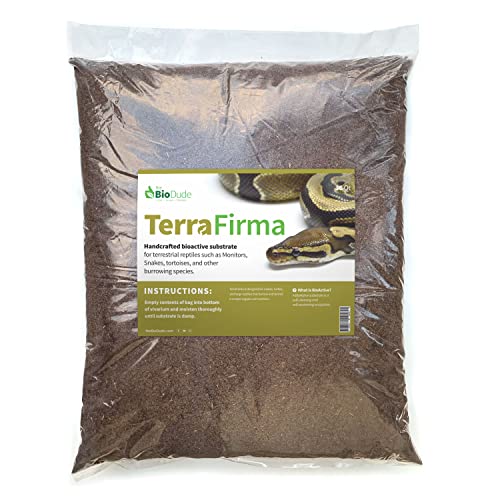
The Bio Dude Terra Firma
Best for a bioactive desert enclosure with a cleanup crew.
- Type: premixed desert bioactive substrate
- Built for bearded dragons, uromastyx, and desert geckos
- Pairs with an arid isopod and springtail cleanup crew
Why we pick it
- Comes premixed, skipping the guesswork of building a uromastyx substrate mix from scratch
- Supports light burrowing while staying stable enough for a bioactive setup
- Reduces manual spot cleaning once a cleanup crew is established
Keep in mind
- Let the mix cure and settle before adding a uromastyx, and skip it for animals prone to impaction on a coarse mix

The Bio Dude Terra Sahara Bioactive Substrate
Best for keepers who want a refined bioactive base layer.
- Type: premium premixed desert bioactive substrate
- Built for desert geckos, uromastyx, and bearded dragons
- Designed as a long term bioactive base rather than a spot clean substrate
Why we pick it
- Named on veterinary care sheets among acceptable uromastyx substrates
- Supports burrowing and plant roots in a live bioactive uromastyx enclosure
- Reduces the need to fully replace substrate on a set schedule
Keep in mind
- Availability runs more limited in the United States than other Bio Dude or Zoo Med lines

Josh’s Frogs Desert BioBedding
Best for a budget friendly bioactive start.
- Type: premixed desert bioactive substrate
- Built for bearded dragons, uromastyx, and desert geckos
- Sold premixed and ready to lay down
Why we pick it
- A straightforward premixed desert blend for a first build
- Skips the labor of blending sand, soil, and clay by hand
- Works as a starter layer for a first uromastyx bioactive enclosure
Keep in mind
- Check moisture at the substrate line regularly, as with any loose mix

Slate or Ceramic Tile (cut to size)
Best for juveniles, quarantine tanks, and easy cleanup.
- Type: solid substrate, cut to fit the enclosure floor
- Used for bearded dragons, leopard geckos, and blue tongue skinks in quarantine
- Zero impaction risk since there is nothing loose to swallow
Why we pick it
- Removes impaction risk entirely for a juvenile or a lizard recovering from illness
- Wipes clean in minutes with no substrate to scoop or replace
- Slate in particular holds heat well under a basking spot
Keep in mind
- Sand and seal sharp edges before use, and check for hot spots since tile holds heat unevenly under a lamp
Compare the picks
| Product | Type | Best for | |
|---|---|---|---|
| Zoo Med Excavator Clay Burrowing Substrate | Excavator clay | Uromastyx and other diggers | View |
| The Bio Dude Terra Firma | Premixed desert bioactive | Bioactive desert enclosures | View |
| The Bio Dude Terra Sahara Bioactive Substrate | Premium premixed desert bioactive | Refined long term bioactive setups | View |
| Josh’s Frogs Desert BioBedding | Premixed desert bioactive | Budget friendly bioactive starts | View |
| Slate or Ceramic Tile | Solid substrate | Juveniles and quarantine | View |
How to set up uromastyx substrate
Place the enclosure on a level, stable surface before adding any substrate. A tilted floor causes water and heat to pool unevenly. Set the layout up once, and avoid moving a full enclosure later.
Layer excavator clay or a bioactive mix a few inches deep across the cool and middle zones so a uromastyx can dig. Switch to a thinner layer or tile directly under the basking spot. Our uromastyx enclosure guide covers sizing and layout if the tank itself still needs planning.
Keep a thermostat on the heat source no matter which substrate sits underneath it. Substrate alone does not prevent burns or overheating. That job belongs to the thermostat and the lamp setup, not the flooring.
Check humidity at substrate level with a hygrometer. Aim for the low end of the 10 to 40 percent range most uromastyx husbandry sources recommend. Excess moisture in the substrate promotes mold and bacteria.
Spot clean waste daily. Plan a full substrate change on a schedule that fits the material, from every few months for loose mixes to a simple wipe down for tile. Add a rock ledge or flat stone over part of the substrate so a uromastyx can bask directly on stone, closer to the rocky perches it would use in the wild.
Keep the deepest substrate away from the direct basking beam so it does not scorch or dry into dust. A bioactive layer benefits from live plants and a cleanup crew. Our bioactive enclosure guide covers that setup.
Common mistakes with uromastyx substrate
The most common mistake is using plain play sand for uromastyx as the entire substrate layer. That raises the odds of impaction if a lizard swallows sand while hunting food or exploring. Mix sand into soil or clay instead of using it alone.
A second common mistake is skipping the hydration and dry out cycle on excavator clay. Skipping it leaves tunnels prone to collapse, or leaves the clay too hard to dig at all. A uromastyx that cannot hold a stable burrow often paces the glass or refuses to settle.
Overwatering any substrate is another frequent error. Uromastyx come from some of the driest habitats among lizards. They do not tolerate constant dampness at the substrate line.
Skipping a proper depth for a digging species is common too. A thin layer of any substrate collapses the moment a uromastyx starts to tunnel. Give diggers enough material to actually bury themselves.
Some keepers also change out an entire bioactive substrate on a fixed schedule out of habit. A live setup with a working cleanup crew needs far less full replacement than that.
Frequently Asked Questions
What is the best substrate for uromastyx?
Excavator clay burrowing substrate or a premixed desert bioactive blend both work well. They support digging while lowering the impaction risk of loose sand. Solid options like tile suit juveniles and quarantine tanks where digging is not the priority.
Is play sand safe for uromastyx?
Plain play sand alone raises impaction risk if swallowed. Most keepers mix it into soil or clay rather than using it by itself. A uromastyx substrate mix with a smaller sand fraction behaves more like the firm ground uromastyx dig into in the wild.
How deep should uromastyx substrate be?
Wild uromastyx dig burrows that run several meters underground with multiple entrances, so captive enclosures cannot match that scale. A workable layer needs enough depth for a uromastyx to fully cover itself and hold a tunnel shape. Chicago Exotics Animal Hospital describes dig boxes of topsoil as deep as 2 feet for keepers who want real tunnels.
Can uromastyx use a uromastyx seed substrate mix?
A uromastyx seed substrate means a dry layer of millet or bird seed, which vet care sheets list as an acceptable option because it is edible if swallowed. It molds fast once damp and holds no burrow, so it suits a bone dry enclosure or a feeding patch rather than the whole floor. Watch that the lizard does not fill up on seed instead of its greens.
Does uromastyx bedding need to hold humidity?
No. Uromastyx come from arid habitats, and captive housing generally runs at 10 to 40 percent humidity at the cool end. Bedding that stays too damp encourages bacteria and mold rather than helping a uromastyx.
How often should uromastyx substrate be changed?
Loose sand or soil mixes typically need a full change every few months alongside daily spot cleaning. A bioactive setup with an established cleanup crew of isopods and springtails needs far less full replacement. Solid substrates like tile just need routine wiping.
Sources
- LafeberVet: Basic Information Sheet, Uromastyx. lafeber.com
- Animal Diversity Web: Uromastyx acanthinura. animaldiversity.org
- Arbor View Animal Hospital: Uromastyx Care Sheet. arborviewah.com
- Chicago Exotics Animal Hospital: Uromastyx Care. exoticpetvet.com