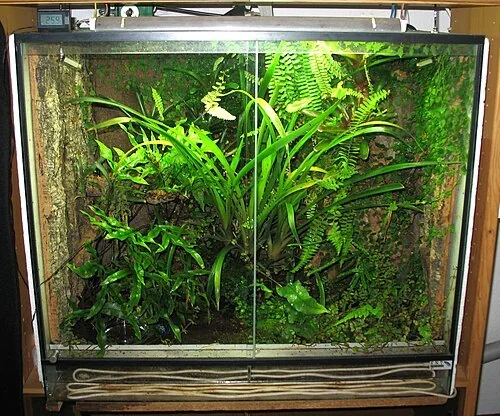
A reptile thermostat, such as the Exo Terra Dimming and Pulse Proportional Thermostat, is the single piece of gear that keeps a heat source from turning into a hazard. It sits between the wall outlet and the heat mat, ceramic heat emitter, or basking bulb. It cuts or trims power once the enclosure reaches the temperature you set.
At a glance: A reptile thermostat regulates a heat mat, ceramic heat emitter, or basking bulb by cycling or trimming power to hold a set temperature. Pulse proportional and dimming thermostats hold the tightest range. On off units swing the most, and probe placement matters as much as the model.
As an Amazon Associate, Lizardist earns from qualifying purchases. Some product links on this page are affiliate links.
Why every heat source needs a thermostat
Reptiles cannot sweat or shiver back to a safe temperature. They rely on moving toward or away from a heat source. That only works if the warm end of the enclosure stays in a predictable range.
A heat mat or bulb plugged straight into the wall has no way to know when to stop. It keeps adding heat past the point a reptile can tolerate. The heating and UVB overview covers how a thermostat fits into a full enclosure build.
Vets describe thermal burns as one of the most common injuries seen in pet reptiles. Most trace back to equipment that ran unchecked or was mismatched to the animal. Reptiles often fail to pull away from a hot surface, possibly because heat and pain signals are not linked the way they are in mammals.
Types of reptile thermostats
Three designs cover almost every setup: on off, pulse proportional, and dimming. Each one controls power differently. That difference decides how stable the enclosure stays and which heat source it should run.
On off thermostat
An on off thermostat, such as the Inkbird ITC-308 Digital Temperature Controller, is the simplest option. It switches the heat source fully on until the probe reads the set temperature, then switches it fully off. This cycle produces the widest swings of any thermostat type, sometimes several degrees past the target before it corrects.
An on off thermostat still has a place as a backup cutoff paired with a more precise primary unit. It also suits a low wattage heat mat under close monitoring. It is a poor primary choice for a basking bulb, since the light will switch on and off all day as the unit cycles.
Dimming thermostat
A dimming thermostat behaves like a lamp dimmer switch. It smoothly raises or lowers the voltage reaching the bulb instead of switching it fully on or off. The light stays on continuously at a level matched to how much heat the enclosure needs.
This keeps output tight with no visible flicker. A dimming thermostat is the standard choice for basking bulbs, halogen flood lamps, and any other heat source that also produces light.
Pulse proportional thermostat
A pulse proportional thermostat pulses power on and off many times a minute rather than smoothly varying voltage. The closer the reading gets to the set point, the shorter and less frequent the pulses become. This holds temperature in a narrow band with far less overshoot than an on off unit.
The pulsing itself would cause a bulb to flicker. A pulse proportional thermostat is built for heat sources that do not emit light, such as heat mats, heat cables, and ceramic heat emitters.
| Thermostat type | How it controls power | Best heat source | Typical temperature swing |
|---|---|---|---|
| On off | Full power, then none, at the set point | Low wattage heat mat, backup cutoff | Widest, several degrees |
| Pulse proportional | Rapid on off pulses that shorten near the target | Heat mat, heat cable, ceramic heat emitter | Narrow, close to the set point |
| Dimming | Smooth, continuous voltage change | Basking bulb, any light emitting heat source | Narrow, no visible flicker |
Matching a thermostat to a heat source
A thermostat for a heat lamp needs to handle light output as well as heat. That is why a dimming model is the usual pick for a basking bulb or halogen flood lamp. It works alongside a separate UVB lighting setup rather than replacing it.
A heat mat thermostat almost always runs in pulse proportional mode instead. The mat produces no light for a pulsing signal to disturb. Ceramic heat emitters and radiant heat panels pair well with a pulse proportional thermostat for the same reason.
A full reptile supplies checklist covers where a thermostat fits alongside the rest of the setup. Check a thermostat’s maximum wattage rating against the heat source before wiring anything together. A unit rated for a 100 watt load should never run a 150 watt bulb.
Running two heat sources off one thermostat and one probe is a common mistake. It leaves one device unmonitored the whole time. Each heat source in the enclosure needs its own thermostat and its own probe.
Thermostat probe placement
Thermostat probe placement matters as much as the unit itself. The reading it sends is the only information the thermostat has. A probe in the wrong spot will make good equipment behave badly.
For a heat mat, tape the probe to the same panel the mat heats. Put it on the same end of the enclosure, either on the glass above the mat or under the substrate right over it. A probe left on the cool side will let the mat run at full output far longer than intended.
For a basking bulb, such as a Zoo Med Repti Halogen Basking Spot Lamp, position the probe at the height the reptile reaches when basking. Keep it close to the heated surface without touching the bulb or fixture. Manufacturer instructions usually give a minimum distance from the bulb, since a probe pressed against it reads hotter than the basking spot really is.
A second, independent thermometer at the same spot is worth adding. See thermometers and other measurement tools for models that hold up well next to a heat source. It lets you check the thermostat’s reading against a separate device.
Safety rules for reptile thermostats
Every enclosure with a heat mat, ceramic heat emitter, or basking bulb needs a thermostat running that device. Devices without any temperature control, most notably heated rocks, have a documented history of running unevenly hot. Reports describe cases of these devices shorting out and causing burns or house fires.
Vets describe healing from a serious thermal burn as a process of weeks to months, even with prompt treatment. First degree burns show reddening and small blisters. Second and third degree burns bring blistering, oozing, and in severe cases charring.
Buy a thermostat rated above the wattage of the heat source it will run. Keep the probe at the correct spot for that heat source. Check the enclosure with a separate thermometer on a regular basis.
Replace a thermostat that shows erratic readings or fails to hold temperature. A reptile veterinarian can advise on temperature ranges and equipment choices specific to a species. Species pages such as the bearded dragon temperature guide, leopard gecko care page, and green iguana habitat guide give exact target ranges to set a thermostat against.
The general lizard enclosure guide covers the rest of the build around the thermostat. Pairing the right reptile thermostat with correct probe placement removes most of the risk from any heating setup.
Recommended Reptile Thermostats
The right thermostat depends on the heat source it controls. A dimming or pulse proportional unit is the only safe match for a basking bulb, CHE, or deep heat projector. A basic on/off thermostat works fine for a heat mat or heat tape. The picks below cover both categories plus a day and night option for species that need a temperature drop after dark.
- Best overallVivarium Electronics VE-100 Dimming ThermostatView on Amazon
- Best proportional all rounderExo Terra Dimming and Pulse Proportional ThermostatView on Amazon
- Best on/off for heat mats and CHEsInkbird ITC-308 Digital Temperature ControllerView on Amazon
- Best for day and night dropsInkbird ITC-306T Pre-Wired Heating Thermostat with TimerView on Amazon

Vivarium Electronics VE-100 Dimming Thermostat
Best for basking bulbs, halogen floods, deep heat projectors, and radiant panels in small to medium lizard enclosures.
- Dimming output
- Single probe zone
- Sized to bulb wattage
Why we pick it
- Dimming keeps a basking bulb from failing early the way on/off cycling can
- Proportional output holds the basking spot steady instead of swinging around the set point
Keep in mind
- Costs more than an on/off controller and must match the bulb wattage
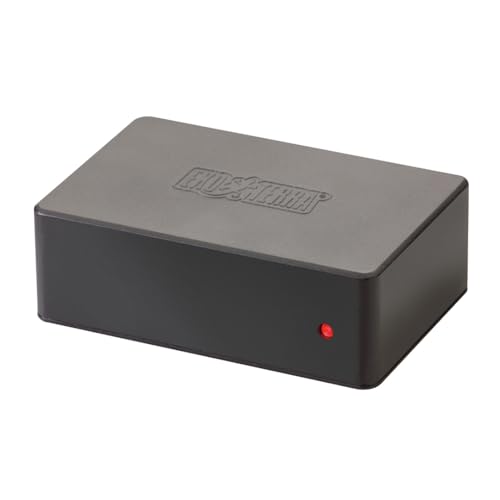
Exo Terra Dimming and Pulse Proportional Thermostat
Best for basking bulbs, CHEs, deep heat projectors, or radiant panels across most lizard species in a single enclosure.
- Pulse proportional mode for ceramic and radiant heat
- Single probe zone
- Digital readout
Why we pick it
- Pulse proportional control suits ceramic heat emitters better than a plain dimmer
- One unit covers most lizard heat sources when set to the right mode
Keep in mind
- Priced above entry level on/off units and manages only one probe zone

Inkbird ITC-308 Digital Temperature Controller
Best for heat mats, CHEs, and radiant panels in small to medium lizard enclosures.
- On/off switching
- Dual outlet ports
- Digital display
Why we pick it
- Dependable on/off switching at a lower cost than a dimming unit
- Two outlets allow a heat source and a second device on one controller
Keep in mind
- Never pair this with a basking bulb, since on/off cycling shortens bulb life fast

Inkbird ITC-306T Pre-Wired Heating Thermostat with Timer
Best for temperate and desert species that need a lower nighttime temperature on a heat mat, heat tape, CHE, or radiant panel.
- Built in day and night timer
- Prewired outlet
- On/off switching
Why we pick it
- The timer sets a separate day and night target without a second controller
- Prewired design skips extra setup steps
Keep in mind
- Shares the on/off limitation of the ITC-308, so keep it off basking bulbs
For a closer look at pairing a thermostat with a heat mat, see our reptile heat mat picks.
Frequently Asked Questions
Do I need a thermostat for a heat lamp, or only for a heat mat?
Both need one. A basking bulb without a thermostat runs at full output all the time, which can push basking spot temperatures well past what a reptile can safely tolerate.
Can one thermostat run two heat sources at once?
No. Each heat mat, bulb, or ceramic heat emitter needs its own thermostat and its own probe, since one probe cannot represent conditions at two different spots.
What is the difference between a pulse proportional thermostat and a dimming thermostat?
A pulse proportional thermostat uses rapid on off pulses and suits heat sources with no light, like heat mats and ceramic heat emitters. A dimming thermostat smoothly varies voltage instead, which avoids flicker on a basking bulb.
Where should the thermostat probe sit for a heat mat?
Tape it to the same surface the mat heats, on the same end of the enclosure as the mat, either on the glass above it or under the substrate directly over it. A probe left on the cool side lets the mat run far hotter than intended.
Is an on off thermostat good enough for a reptile enclosure?
It can work as a backup cutoff or on a low wattage mat under close watch. Its wide swings make it a poor primary thermostat for a basking bulb or a species with narrow temperature needs.
How do I know if a thermostat is working correctly?
Check the enclosure with a separate thermometer at the probe location and compare the two readings often. Replace a thermostat that lets the temperature drift well outside its set point or that shows erratic readings.
Sources
- PetMD: Thermal Burns in Reptiles. https://www.petmd.com/reptile/conditions/skin/thermal-burns-reptiles
- dvm360: Understanding Thermal Burns in Reptile Patients (Proceedings). https://www.dvm360.com/view/understanding-thermal-burns-reptile-patients-proceedings
- University of Hawaii at Manoa, Exploring Our Fluid Earth: Reptile Thermoregulation. https://manoa.hawaii.edu/exploringourfluidearth/biological/amphibians-reptiles-and-birds/reptiles/activity-reptile-thermoregulation
- University of Washington: Proportional Temperature Controllers. https://faculty.washington.edu/brengelm/neut_zone/pg4.html