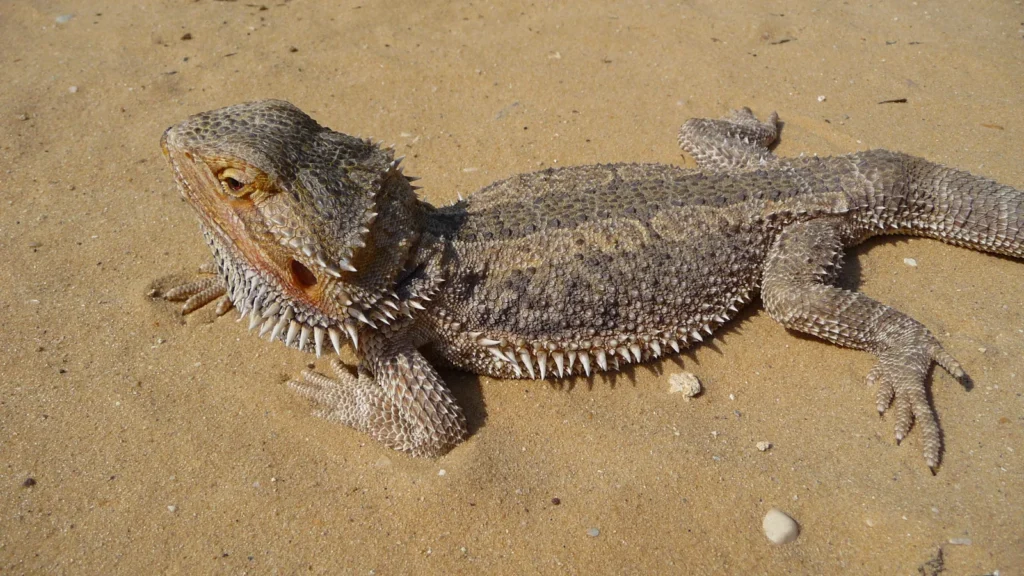
At a glance: Reptile heating and lighting means building a thermal gradient with a warm basking end and a cool end, adding UVB matched to the species’ Ferguson zone, and running a day and night cycle that mimics the wild. Get the numbers wrong and a lizard cannot digest food, fight infection, or build bone.
As an Amazon Associate, Lizardist earns from qualifying purchases. Some product links on this page are affiliate links.
Reptile heating and lighting is the part of an enclosure setup that most often gets guessed at instead of measured. A lizard cannot generate its own body heat. Every hour of its day depends on temperatures and light a keeper sets by hand.
This guide covers the thermal gradient, basking spots, and night heat. It also covers UVB, the Ferguson zones, and the day and night cycle. It works for any lizard, not just one species.
Species pages on this site give exact target numbers. A bearded dragon and a crested gecko need very different setups. This page explains the system behind those numbers, so the species pages make more sense.
The Thermal Gradient
A thermal gradient is a spread of temperatures across the enclosure. One end runs hot for basking, the other stays cooler for retreat. Wild lizards move between sun and shade all day to hold their body temperature steady.
A captive enclosure needs to offer that same range of choices. Too hot and the lizard cannot cool down. Too cold and it cannot warm up enough to digest food or fight off infection.
The cool end matters as much as the basking spot. It should sit near the low end of the species’ preferred range. Check both ends with two separate thermometers, never just one.
The Merck Veterinary Manual puts most tropical species in a daytime range of 80 to 100°F (27 to 38°C) and temperate species at 68 to 95°F (20 to 35°C). The preferred zone for a given lizard is narrower than that, as the table shows.
| Lizard | Preferred daytime zone (Merck) | What that means for the build |
|---|---|---|
| Bearded dragon | 77 to 90°F (25 to 32°C) | Cool end near 77°F, basking surface about 9°F above the warm end, strong UVB |
| Leopard gecko | 77 to 86°F (25 to 30°C) | Gentle gradient, belly heat or a low wattage overhead source, low UVB optional |
| Green iguana | 84 to 91°F (29 to 33°C) | Whole enclosure warm, large basking area high in the cage, strong UVB |
| Water dragon | 75 to 86°F (24 to 30°C) | Warm and humid at 80 to 90 percent, basking branch over water, moderate UVB |
| Savannah monitor | 77 to 90°F (25 to 32°C) | Large basking area with a very hot surface, deep substrate stays cooler, strong UVB |
Those are air temperatures across the gradient. The basking surface sits above them, and the night low sits below them, which the next two sections cover.
Basking Spot Temperatures
A basking spot is a small, sharply defined hot zone under a heat source. Surface temperature there runs several degrees above the rest of the warm end. Merck’s husbandry guidance puts the basking surface about 9°F (5°C) warmer than the air gradient around it.
Measure that number at the actual basking surface, not the air nearby. A temperature gun or a surface probe works best for this. Bulb packaging alone never tells the real story.
Basking bulbs need distance from the animal. Keep them at least 18 inches from the basking surface and from any decor a lizard could climb close to. A typical basking bulb needs 50 to 75 watts to hold a proper spot, though enclosure size changes that number.
Never trust a bulb’s stated wattage on its own. Let the light run for 30 minutes, then measure the actual surface temperature. Adjust wattage, distance, or a dimming thermostat, such as the Exo Terra Dimming and Pulse Proportional Thermostat, until the number matches the target.
Night Heat
Night heat covers the temperature drop that should happen after lights out. Merck recommends a night low about 9°F (5°C) below the daytime gradient for every species it covers. That dip matches what happens after sunset in the wild.
Tropical species rarely need extra night heat in a warm room. A modest drop overnight is normal and healthy for them. Species from cooler climates, or any room that drops below a species’ safe minimum, need a dedicated night heat source instead.
A ceramic heat emitter or a deep heat projector is the standard pick for night heat. Both produce infrared heat with no visible light, so they will not disturb sleep. Either type still needs its own thermostat, since neither has a built in cutoff.
Choosing a Heat Source
Basking bulbs, ceramic heat emitters, and deep heat projectors cover most heating needs. Each one suits a different role. A basking bulb gives visible light plus heat, and works well as the main daytime source for desert species.
A ceramic heat emitter gives heat with no light at all. That makes it useful for night heat or as background warmth in a cool room. It is not meant to replace a basking bulb during the day.
A deep heat projector is a more focused type of infrared emitter. It aims to mimic the penetrating warmth of real sunlight on skin and muscle. Many keepers run one alongside a basking bulb and UVB tube, such as the Arcadia ProT5 Kit Desert 12%, for a fuller setup.
Under tank heaters have a narrow role. They should never cover more than about 30 percent of the floor space. Never place one under a water dish or thick substrate, since trapped heat there can overheat the enclosure.
Loose heat rocks are never a safe choice. Their heating is uneven and burns are common with them. A thermostat is not optional for any heat source discussed here.
Pair every heat source with a properly rated thermostat and a probe at the basking surface. See our guide to reptile thermostats for the differences between dimming, pulse proportional, and on and off models.
Reptile UVB and the Ferguson Zones
Reptile UVB lighting supplies the ultraviolet B wavelength a lizard’s skin uses to make vitamin D3. That range runs roughly 290 to 320 nanometers. Without enough UVB, most day active lizards cannot process calcium properly, which leads to metabolic bone disease over time.
A handful of nocturnal species can get by on dietary vitamin D3 alone. Most pet lizards still need a real UVB source. Skipping UVB to save money is one of the more common mistakes in lizard care.
Researcher Gary Ferguson and colleagues grouped reptiles into four UV index zones. Each zone reflects how much sun exposure a species seeks out in the wild. These groups are now widely known as the Ferguson zones.
The table below gives the UV index, or UVI, range each zone targets at the basking spot. Measure it with a UV index meter or a solarmeter. Never guess a zone’s output from bulb packaging alone.
| Ferguson zone | Basking behavior | Basking UVI range |
|---|---|---|
| Zone 1 | Shade dwellers and crepuscular species, rarely bask directly | 0 to about 0.7, up to 1.4 at the brightest |
| Zone 2 | Partial sun species that bask occasionally in filtered light | 0.7 to 1.0, up to about 3.0 at peak |
| Zone 3 | Open or partial sun baskers, many common pet lizards | 1.0 to 2.6, up to about 7.4 at peak |
| Zone 4 | Midday sun baskers in open, exposed habitat | 2.6 to 3.5, up to about 9.5 at peak |
Most keepers use one of two gradient designs to hit these numbers. The shade method suits zones 1 and 2. It spreads a low, even UV level across much of the enclosure, dropping to zero in a shaded hide.
The sunbeam method suits zones 3 and 4 instead. It uses a stronger UVB tube or bulb to build one distinct high UVI patch at the basking spot. UV output then drops fast toward the cool end.
A safe ceiling matters as much as a minimum. Guidance from UV researchers puts 7.0 to 8.0 UVI as the practical upper limit, even for sun loving zone 4 species. A bulb held too close or too strong can cause eye and skin damage that direct sun rarely does indoors.
Distance decides the dose. Merck puts fluorescent UVB tubes within 12 inches (30 cm) of the basking area, while a mercury vapor bulb can reach about a meter. Any mesh between bulb and lizard cuts the output further, so measure through the lid, not above it.
Unfiltered sun still beats any bulb. Merck notes that even one to two hours a week of direct outdoor sun, in a secure enclosure with shade available, produces measurable health benefits. Glass and window screen block most UVB, so a sunny windowsill does not count.
Test UVB output with a meter every few months. Fluorescent and mercury vapor tubes lose real output well before they stop glowing. Merck’s replacement interval is 9 to 12 months for fluorescent tubes and 12 months for mercury vapor bulbs, even though the bulb still lights up.
Full details on reptile UVB tube types and mounting distance are in our reptile UVB lighting guide. Choosing the right reptile heating and lighting combination starts with matching the bulb to the zone, not the other way around.
Photoperiod and the Day and Night Cycle
Photoperiod is the number of hours of light and dark a lizard gets each day. It should shift with the seasons rather than stay fixed all year. Tropical and subtropical species generally do well on 10 hours of light in winter, rising to about 14 hours in summer.
Species from more temperate zones often need a wider swing. That can mean around 8 hours of light in winter, up to 16 hours in summer. This seasonal shift helps trigger normal appetite, activity, and breeding behavior.
A lizard kept on a flat 12 hour cycle all year can show blunted seasonal behavior as a result. A simple outlet timer on both the basking bulb and the UVB tube keeps the schedule consistent. Turn heat and light on and off together each day.
Putting the System Together
A complete setup starts with the enclosure itself. Its size and material shape how a gradient forms and holds. See our guide to lizard enclosures for sizing and material choices.
Check our bioactive enclosure guide too, if live plants and a working substrate ecosystem are part of the plan. Once the enclosure is set, add the heat and light sources in order.
Place a basking heat source at one end. Add a UVB source positioned to match the species’ Ferguson zone. Add a night heat source only where the room runs cold.
Every heat source needs its own thermostat. Every zone needs a way to check it, whether a stick on dial, an infrared gun, or a probe left in place. Skipping measurement is the most common mistake in the whole system.
Our reptile measurement tools guide covers thermometers, hygrometers, and UV index meters in detail. A species specific guide, like our bearded dragon temperature guide, gives exact numbers once this system is in place. Our lizard health guide covers the early signs of a setup that is not working.
Frequently Asked Questions
What is the difference between a basking bulb and a ceramic heat emitter?
A basking bulb produces visible light along with heat, and it works as a daytime basking source. A ceramic heat emitter produces heat with no light. That makes it better suited to night heat or background warmth.
Do all lizards need UVB lighting?
Most day active lizards need UVB to make vitamin D3 and process calcium properly. A small number of strictly nocturnal species can rely on dietary vitamin D3 instead. Low level UVB is rarely harmful even for those species.
How do I know which Ferguson zone my lizard needs?
Ferguson zone recommendations exist for most common pet species. They usually appear on a species care guide or with the UVB bulb chosen for it. Desert and open habitat baskers tend to sit in zones 3 or 4, while shade dwelling species sit in zones 1 or 2.
Can I use a heat lamp instead of UVB?
No. A heat lamp raises temperature but produces no UVB wavelengths, so it cannot support vitamin D3 production on its own. Heat and UVB are separate jobs that usually need separate bulbs.
How often should UVB bulbs be replaced?
Most fluorescent and mercury vapor UVB bulbs lose real output well before they stop producing visible light. Many need replacement within 6 to 12 months of regular use. A UV index meter is the only reliable way to confirm a bulb still works.
Should the photoperiod change with the seasons?
Yes, for most species. A gradual seasonal shift in day length, shorter in winter and longer in summer, mimics natural conditions. It supports normal appetite, activity, and reproductive cycles better than a fixed schedule.
Sources
- Merck Veterinary Manual: Providing a Home for a Reptile. https://www.merckvetmanual.com/all-other-pets/reptiles/providing-a-home-for-a-reptile
- Merck Veterinary Manual: Management and Husbandry of Reptiles. https://www.merckvetmanual.com/exotic-and-laboratory-animals/reptiles/management-and-husbandry-of-reptiles
- Journal of Zoo and Aquarium Research (Baines et al. 2016): How much UVB does my reptile need? The UV Tool, a guide to the selection of UV lighting for reptiles and amphibians in captivity. https://jzar.org/jzar/article/view/150
- Merck Veterinary Manual: Important Husbandry Requirements for Selected Reptiles (table). https://www.merckvetmanual.com/multimedia/table/important-husbandry-requirements-for-selected-reptiles