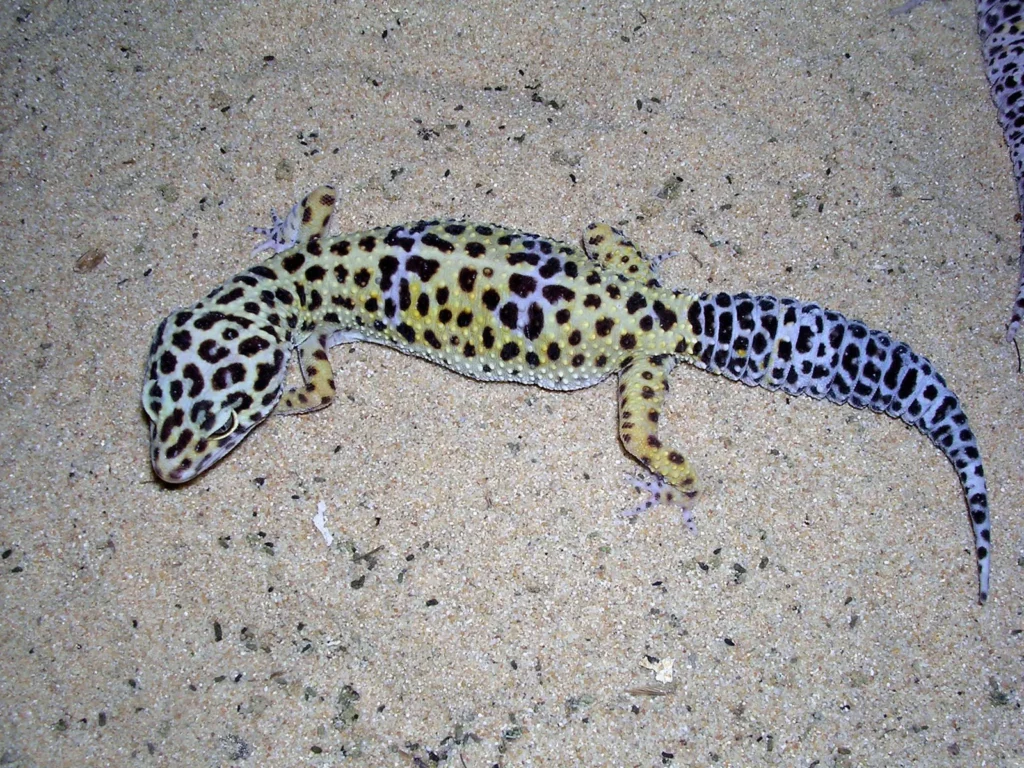
At a glance: leopard gecko vs crested gecko usually comes down to handling and heat tolerance. Leopard geckos are ground dwelling and tolerate gentle handling well. Crested geckos climb, need higher humidity, and are more heat sensitive.
As an Amazon Associate, Lizardist earns from qualifying purchases. Some product links on this page are affiliate links.
Leopard gecko vs crested gecko is one of the most common questions for anyone choosing a first pet lizard. Both are small and calm. Both are widely available as captive bred animals, and both forgive a beginner’s early mistakes.
Where they differ is habitat shape, heat and humidity needs, diet, and how each one handles being picked up. This guide lines the two geckos up side by side. For full care detail, see the dedicated leopard gecko and crested gecko pages.
Leopard Gecko vs Crested Gecko: Quick Comparison Table
| Trait | Leopard gecko | Crested gecko |
|---|---|---|
| Adult size | 6.5 to 10 inches, 45 to 90 grams; males heavier | About 8 inches including the tail, 30 to 55 grams |
| Lifespan | 15 to 20 years is common; LafeberVet gives 25 to 30 years as possible | 15 to 20 years is common; Animal Diversity Web says over 20 years is likely |
| Activity pattern | Nocturnal and crepuscular, ground dwelling | Crepuscular, arboreal and climbs constantly |
| Toe pads | None, clawed feet, cannot climb glass | Sticky toe pads, climbs glass and branches |
| Enclosure size | Floor space matters most; a 20 gallon long (30 by 12 inches) is the practical minimum for one adult, 10 to 15 gallons the veterinary bare minimum | Height matters most; 18 by 18 by 24 inches for one adult, 20 gallons the veterinary minimum |
| Temperature | Gradient of 70 to 80°F with a basking surface near 90°F; 70s at night | 72 to 80°F by day, mid to upper 60s at night is fine; sustained heat above the low 80s is dangerous |
| Humidity | 40 to 60 percent ambient, plus a humid hide for shedding and egg laying | 60 to 80 percent, with a daily evening misting and a drier period each day |
| UVB lighting | Beneficial though historically kept without it | Beneficial, low output UVB is standard practice today |
| Diet | Insectivore: crickets, mealworms, roaches, occasional waxworms | Omnivore: commercial gecko diet plus appropriately sized insects |
| Feeding frequency | Daily for juveniles, every other day for adults | Prepared diet 3 times weekly, insects once or twice weekly |
| Handling tolerance | Generally tolerant once settled | Tolerant, but may jump when startled, tail loss is permanent |
| Tail regrowth | Regrows a stumpy replacement tail | Does not regrow a lost tail |
| Sexual maturity | 9 to 18 months | 9 to 12 months for males, about 12 months and 30 to 35 grams for females |
| Beginner friendliness | Very high | Very high, with slightly more humidity upkeep |
Size and Lifespan
A leopard gecko reaches 6.5 to 10 inches long as an adult. Males weigh 60 to 90 grams and females can be as light as 45 grams.
With consistent husbandry the species commonly lives 15 to 20 years. LafeberVet puts the upper end at 25 to 30 years.
A crested gecko is a little smaller and lighter. Animal Diversity Web gives an average total length of about 8 inches and a mass of 30 to 35 grams. Well fed captive adults often reach 40 to 55 grams.
Lifespan is less settled. ADW considers more than 20 years likely in captivity, while some exotic veterinary clinics quote 5 to 10 years as typical. The gap mostly reflects how new the species is in captivity and how many are lost to heat stress or calcium problems.
Neither species is a short term pet. Plan on 15 years or more for either one.
Habitat and Enclosure Setup
The biggest practical difference between these two geckos is enclosure shape. Leopard geckos are ground dwelling with clawed toes and no climbing ability. Floor space matters far more than height, so a low, wide tank with secure hides works well.
Crested geckos are arboreal climbers with sticky toe pads that grip glass and branches. Their enclosures should prioritize vertical height, with plenty of cork bark and foliage for climbing.
Hatchling crested geckos can start in a 10 gallon enclosure. A single adult does better in an 18 by 18 by 24 inch front opening terrarium, and 20 gallons is the minimum exotic veterinarians quote for one adult.
A pair needs a minimum of about 18 by 18 by 20 inches. Two male crested geckos should never share an enclosure because of aggression.
Leopard gecko sizing follows floor area rather than height. LafeberVet gives a long 10 to 15 gallon tank as the bare minimum for one adult. A 20 gallon long with a 30 by 12 inch floor is the practical standard, so check the full leopard gecko care guide before buying a tank.
Temperature, Humidity, and Lighting
Leopard geckos come from arid, rocky terrain and are set up as a desert species. They need a gradient of about 70 to 80°F across the floor with a basking surface that reaches 90°F. Nights can drop into the 70s.
Ambient humidity of 40 to 60 percent works. One humid hide, such as an Exo Terra/Zoo Med Humid Hide (with moss chamber), should still be available for shedding and for females that need to lay eggs.
Crested geckos need the opposite profile. Keep the enclosure at 72 to 80°F by day and let it fall into the mid to upper 60s at night. Avoid any sustained stretch above the low 80s, since heat stress kills this species faster than any other husbandry mistake.
Humidity should cycle between 60 and 80 percent. It rises after an evening misting and dries out somewhat by the next day.
Both animals benefit from appropriate UVB lighting, even though leopard geckos were historically kept without it. Low output UVB is enough for either species.
The basking bulb for a leopard gecko needs a reliable thermostat. Most crested gecko rooms need no heat source at all.
Diet and Feeding
Leopard geckos are strict insectivores. Captive diets typically include crickets, mealworms, roaches, and occasional waxworms as a treat, dusted with calcium on a regular schedule.
Juveniles eat daily, while adults are usually fed every other day. Remove uneaten insects so they do not nip a resting gecko overnight.
Crested geckos are omnivores that eat insects, nectar, and fruit in the wild. Most keepers feed a prepared complete gecko diet mixed with water about three times a week. Gut loaded crickets or roaches go in once or twice a week.
Insects should be no larger than the gecko’s snout to eye distance and dusted with calcium.
A powdered complete diet, such as Repashy Crested Gecko Diet (Complete/Original), covers most nutritional needs without daily live insect husbandry, which simplifies feeding day to day.
Temperament and Handling
Both species are widely considered good starter lizards. Neither is aggressive, and both tolerate regular, gentle handling once acclimated to a new home. Leopard geckos tend to sit calmly in the hand and rarely try to leap away, which makes them a common choice for children under supervision.
Crested geckos also become docile with consistent gentle handling, even as hatchlings. They can be quicker to jump when startled, so handle them low over a soft surface.
Never grab either gecko by the tail. Leopard geckos can regrow a stumpy replacement tail, but crested geckos do not regrow a lost tail at all, so tail loss is permanent for them.
Cost and Ongoing Supplies
Startup costs for either species land in a similar range once a proper enclosure, heating, lighting, and hides are accounted for. Neither is an inexpensive shoebox pet despite a low sticker price for the animal itself.
Recurring costs differ slightly. Leopard geckos need a steady live insect supply and dusting supplements. Crested geckos rely more on a powdered complete diet with fewer insects, which can simplify weekly feeding for a busy keeper.
A full breakdown of setup and running costs across common pet lizards is on the lizard cost of ownership page. General supply recommendations are covered on the reptile supplies page.
Which Gecko Is Best for Beginners?
Choosing between a leopard gecko or crested gecko for a first reptile usually comes down to two questions. How much handling do you want, and are you comfortable managing daily humidity versus a strict temperature ceiling? A leopard gecko suits a keeper who wants a calm, ground dwelling pet with simpler humidity needs and does not mind a live insect feeding routine.
A crested gecko suits a keeper who wants a more active, climbing display animal and does not mind daily misting. It also suits someone who prefers a diet built mostly around a prepared powder rather than live insects every day.
Both appear repeatedly on lists of the best pet lizards for newcomers. The right pick depends on which routine fits your schedule.
Frequently Asked Questions
Is a leopard gecko or crested gecko easier to care for?
Both are considered beginner friendly. Leopard geckos have simpler humidity needs but need daily or near daily live insect feeding. Crested geckos need consistent misting but eat a prepared diet just a few times a week.
Can leopard geckos and crested geckos live together?
No. They come from different climates and need opposite humidity and temperature ranges. Their activity patterns and diets also differ, so housing them together is not appropriate.
Which gecko is better for handling?
Both tolerate regular gentle handling once settled. Leopard geckos tend to sit still more readily. Crested geckos can be quicker to jump when startled, so handle them low over a soft surface.
Do crested geckos need UVB lighting like leopard geckos do?
Low output UVB is now considered beneficial for both species. Leopard geckos were historically kept without it. Current practice for either gecko favors providing appropriate UVB.
Which species grows bigger, the leopard gecko or the crested gecko?
The leopard gecko is slightly larger and much heavier. Adults reach 6.5 to 10 inches and 45 to 90 grams. Crested geckos average about 8 inches with the tail and 30 to 55 grams.
Is a leopard gecko or a crested gecko cheaper to keep?
Startup costs are similar once enclosure, heating, and lighting are factored in. Ongoing costs differ slightly, since crested geckos rely more on a powdered diet while leopard geckos need a steady live insect supply.
Sources
- LafeberVet: Basic Information Sheet: Leopard Gecko. https://lafeber.com/vet/basic-information-for-leopard-gecko/
- Animal Diversity Web: Rhacodactylus ciliatus (crested gecko). https://animaldiversity.org/accounts/Rhacodactylus_ciliatus/
- Animal Diversity Web: Eublepharis macularius. https://animaldiversity.org/accounts/Eublepharis_macularius/
- Long Island Bird and Exotics Veterinary Clinic: Crested Gecko Care Guide. https://www.birdexoticsvet.com/crested-gecko-care-guide
- The Reptile Database: Correlophus ciliatus. Correlophus ciliatus species page