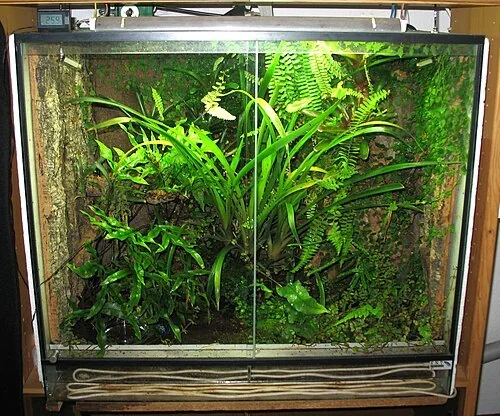
A bioactive enclosure is a lizard habitat built around live plants, a drainage layer, and a cleanup crew of small invertebrates. These invertebrates break down waste and leftover food. Instead of paper towel over a bare floor, the animal lives on a soil blend, such as Josh’s Frogs Tropical BioBedding, that supports a working miniature ecosystem.
Keepers choose a bioactive enclosure for the cleaner smell and steadier humidity. It also looks far more natural than a bare tank. It builds on the basics covered in our lizard enclosure guide, but it takes real planning first.
At a glance: A bioactive enclosure layers drainage material, a barrier, and a soil blend. Isopods and springtails process waste, and live plants hold humidity steady. It suits humid, plant friendly species such as crested geckos far better than dry desert species, and it needs several weeks to establish before the lizard moves in.
As an Amazon Associate, Lizardist earns from qualifying purchases. Some product links on this page are affiliate links.
What Makes an Enclosure Bioactive
The word bioactive describes a process, not a single product. A true bioactive terrarium has three working parts. It needs a soil blend that holds moisture, a population of decomposer invertebrates, and live plants that use the nutrients those invertebrates release.
Remove any one piece and the system stops working as a cycle. A tank full of soil and plants with no cleanup crew is just a planted enclosure. It will still need regular spot cleaning, because nothing is breaking the waste down.
Isopods and springtails without live plants can also work on their own. The plants pull excess moisture and nutrients out of the substrate. Without them, damp soil can turn sour over time.
Benefits and Drawbacks
The main draw of a bioactive reptile enclosure is less spot cleaning. A healthy cleanup crew eats shed skin and leftover feeder insects within a day or two. Solid waste breaks down the same way, so the substrate rarely needs full replacement.
Humidity also holds steadier in a bioactive setup. Damp soil and living plants release moisture on their own. The enclosure dries out less between mistings than a bare tank does.
- Lower odor, since waste is broken down rather than sitting on paper substrate.
- More natural behavior, since lizards dig, climb, and forage through leaf litter.
- Higher upfront cost and setup time than a simple sand and soil mix.
- Isopods can nibble on a sick or shedding lizard if their numbers spike too fast.
A bioactive enclosure is also harder to sanitize quickly during an illness. The substrate cannot simply be tossed out and swapped for something clean. Owners should keep a spare bare bottom enclosure ready for medicating a sick lizard.
Building the Layers
Every bioactive vivarium is built from the bottom up. Each layer does one specific job. Skipping the drainage layer or the barrier above it is the top reason a humid bioactive enclosure turns swampy within a few months.
Drainage Layer
The bottom layer is expanded clay pellets, lava rock, or a plastic egg crate false bottom. Spread loose material two to three inches deep across the enclosure floor. Excess water collects here instead of sitting in the soil, so plant roots never stay waterlogged.
Fit a short length of rigid tube or a corner pocket that reaches the floor before adding substrate. A turkey baster or small siphon can then pull standing water out through it when the layer fills. Dry desert builds skip this layer entirely, which is covered below.
Substrate Barrier
A sheet of fine mesh sits between the drainage layer and the substrate. Fiberglass window screen or landscape fabric both work. Its only job is stopping soil from washing down into the drainage material.
Without this barrier the drainage layer slowly fills with silt. Within a year or two it stops draining and the whole build has to come apart.
Substrate Blend
The bioactive substrate is a soil mix rather than a bagged product. A typical tropical blend is two parts organic topsoil, one part coconut coir, and one part sphagnum moss or orchid bark.
Add a half part of play sand or horticultural charcoal for structure. Peat moss, potting soil, and cypress mulch all sit on the Merck Veterinary Manual’s list of acceptable reptile substrates.
Read the soil bag before buying. Skip anything with added fertilizer, moisture crystals, perlite, or vermiculite.
A lizard can swallow the white granules, and fertilizer salts harm the cleanup crew. Cedar and pine products are out entirely because their oils cause breathing and neurological problems in reptiles.
Depth matters more than most new keepers expect. Species that dig or bury eggs need four to six inches of substrate. Surface dwelling geckos manage with two to three inches, and a deeper bed at the back can slope down to a shallow front.
Avoid pure sand, calcium sand, or reptile carpet in a bioactive build. Sand drains too fast for plant roots and gives isopods nothing to burrow through.
Merck also lists sand and gravel among substrates it does not recommend, because of blockage risk. Reptile carpet gives the cleanup crew no substrate to work at all.
Keepers weighing substrate for a heavy digger, such as a bearded dragon, should compare loose substrate risks first. Bioactive setups are not automatically safer than other loose substrates for every species.
Leaf Litter and Hardscape
A layer of dried leaves, such as oak or magnolia, sits on top of the substrate one to two inches deep. Leaf litter is the cleanup crew’s main food and gives springtails cover. It also slows moisture loss from the soil beneath it.
Collect leaves and wood only from areas that are not sprayed with pesticides. Bake wood at about 250°F (120°C) for an hour, or pour boiling water over it, to kill hitchhiking pests.
Cork bark, grapevine, and stacked stone finish the layout. Rest heavy stone on the enclosure floor or the drainage layer, never on loose soil a lizard can dig under.
Tropical vs Arid Bioactive Setups
A bioactive enclosure does not have to be humid. Desert species such as leopard geckos and bearded dragons are kept bioactive too, but the recipe changes. The table below compares the two designs.
| Feature | Tropical bioactive | Arid bioactive |
|---|---|---|
| Drainage layer | Required, 2 to 3 inches | Usually skipped, no standing water to manage |
| Substrate blend | Topsoil, coir, sphagnum, bark | Roughly 60 to 70 percent topsoil and play sand, with some coir and clay for burrows that hold shape |
| Moisture | Whole bed damp like a wrung out sponge | Dry surface, moist only in the bottom inch or two |
| Isopods | Dwarf white, dwarf purple, powder orange | Hardy Porcellio species that tolerate dry air |
| Springtails | Tropical white springtails thrive | Survive only in the damp bottom layer under hides |
| Extra cleaners | Not needed | Mealworm or darkling beetles and superworm beetles help with dry waste |
| Plants | Pothos, bromeliads, creeping fig, ferns | Haworthia, gasteria, aloe, hardy grasses, spineless succulents |
| Ambient humidity | 60 to 80 percent | 30 to 40 percent, with a humid microclimate under one hide |
An arid build relies on a moisture gradient in the soil rather than through the air. Water the bottom of the bed through a corner tube or under a hide every week or two. The surface stays dry for the lizard while the cleanup crew works the damp layer beneath.
Choosing a Cleanup Crew
Isopods and springtails are the two invertebrate groups that make an enclosure bioactive. Both are harmless to lizards in normal numbers. Both reproduce inside the substrate and eat waste that would otherwise sit and rot.
Isopods
Isopods are small land dwelling crustaceans, better known as pillbugs and sowbugs. They feed mainly on decaying plant material, which is why leaf litter matters, and they need damp cover to avoid drying out.
Adults live two to five years. Females carry eggs in a brood pouch for about a month, then hold the young another two weeks before releasing them.
Dwarf white and dwarf purple isopods stay under a quarter inch, breed quickly, and rarely bother a lizard. Larger Porcellio and Armadillidium species suit drier builds and bigger lizards but breed more slowly. University of California pest guidance notes that pillbugs sometimes chew seedlings and tender leaves, so a booming colony can thin out delicate plants.
A starter culture of 15 to 25 isopods is enough for a 20 to 40 gallon enclosure. Larger builds take a culture per 40 gallons of floor space. Isopods are also a normal protein snack for many lizards, so expect some losses once the animal moves in.
Springtails
Springtails are wingless arthropods 1 to 2 millimeters long that feed on mold, mildew, fungi, and decaying plant matter. Penn State Extension notes that soil populations can reach about 100,000 per cubic meter under leaf litter and mulch. They need high humidity and leave any patch that dries out or waterlogs.
Their main job is mold control. New substrate and fresh wood almost always grow a white fuzz in the first weeks. A healthy springtail population clears it in days, which is why they go in before the lizard does.
Introducing and Feeding the Crew
Add the cleanup crew three to six weeks before the lizard moves in. This lets the population establish without a predator disturbing the substrate. A pinch of fish flake, a slice of squash, or a piece of cuttlebone once a week feeds them until waste and leaf litter take over.
Once the crew is established and the lizard is producing waste, extra feeding is rarely needed. Keep topping up leaf litter and a small piece of rotting wood, because those are the foods that hold the population steady between meals.
Live Plants for Reptiles
Live plants for reptiles do more than decorate a bioactive enclosure. Roots take up nitrogen from waste before it builds up in the soil. Foliage also adds humidity through transpiration while giving the lizard cover.
Hardy, low light plants such as pothos, snake plant, spider plant, and pilea are common starting points. They tolerate uneven watering better than more delicate species do. A humid, warm setup also suits bromeliads, creeping fig, and ferns, while a dry setup does better with haworthia, gasteria, aloe, and hardy grasses.
Treat every nursery plant as contaminated when it arrives. Knock off the potting soil, rinse the roots, and repot in the enclosure blend.
Nursery soil often carries fertilizer, perlite, and systemic pesticide residue that can kill the cleanup crew. Quarantining plants in a separate pot for two to four weeks lets any pesticide residue wear off and shows up hitchhiking pests.
Pick plants that match the lizard’s weight. A crested gecko can sit on a pothos vine, but a bearded dragon flattens anything softer than a snake plant or a stiff succulent. Pot small or slow growing plants in a hidden container at first so roots establish before a digger can disturb them.
Lighting and Humidity for Plant Growth
Live plants need light in a range that overlaps with what lizards need for basking. University of Minnesota Extension puts low light foliage plants at 50 to 250 foot candles and medium light plants at 250 to 1,000 foot candles.
The fixture should sit 12 to 24 inches above the foliage. A full spectrum LED bar across the top of the enclosure reaches those levels, while a UVB tube on its own usually does not.
A single fixture rarely does both jobs well. Run the plant light alongside the UVB tube and heat lamp on the same timer. Our heating and UVB guide covers fixture placement and bulb strength in more detail.
Run plant lighting for 12 to 14 hours a day, which is the range the same extension guidance gives for foliage houseplants. Most lizards do well on a 10 to 14 hour photoperiod, so pick the overlap that suits the species and shift it with the seasons.
Humidity for plants and the cleanup crew usually overlaps with what the lizard needs already. Merck notes that humidity under 35 percent leads to dry skin and shedding trouble.
Sustained levels over 70 percent invite skin infections in species that need dry air. Check moisture a few inches down in the substrate, because the surface dries long before the deeper layers do.
Maintaining a Mature Bioactive Enclosure
A settled bioactive enclosure needs less daily attention than a bare setup. It is not maintenance free, though. Check the drainage layer through the glass so it does not overfill.
Mist or water plants as their soil dries, rather than on a fixed schedule. Trim back plants that outgrow their space every so often. Rotate or replace leaf litter every few months.
Spot clean the way Merck advises for any enclosure: remove visible droppings and uneaten food daily, and disinfect any scoop or tongs, such as Zoo Med Angled Stainless Steel Feeding Tongs, 10″, after use. The cleanup crew handles what is left behind, not a full load of waste from a large lizard. Wipe glass and rinse the water dish weekly.
Watch for isopod or springtail numbers crashing. This often signals the substrate has dried out or turned too acidic. A slow decline in the cleanup crew is an early warning sign worth acting on.
Which Lizards Suit a Bioactive Setup
Species that naturally live in humid forest adapt well to a bioactive terrarium. Species built for hot, dry ground are harder to keep bioactive long term. Species with heavy waste output for their size are harder still.
| Lizard | Fit for Bioactive | Notes |
|---|---|---|
| Crested gecko | Excellent | Arboreal, humid, light waste load, thrives with live plants |
| Gargoyle gecko | Excellent | Similar humidity needs to crested geckos |
| Day geckos | Good | Needs strong planting and good airflow |
| Leopard gecko | Moderate | Needs a drier substrate blend and hardy, low humidity plants |
| Bearded dragon | Difficult | Large waste output and digging stress the substrate quickly |
| Large monitors | Not recommended | Size and waste volume outpace a home cleanup crew |
Smaller, lighter lizards are generally easier to keep bioactive than large, messy species. The cleanup crew has a limited capacity for a given enclosure size. Anyone still choosing a first lizard should compare care needs in our guide to the best pet lizards.
Common Mistakes When Starting Out
Adding the lizard before the cleanup crew has established is the most common early mistake. A hungry lizard can eat through a small isopod colony fast. That leaves nothing to break down waste later.
Skipping the drainage layer or barrier mesh is the second most common issue. It usually shows up months later as a swampy smell. Standing water at the base of the enclosure is another clue.
Overwatering new substrate is another frequent error. A bioactive substrate should feel like a wrung out sponge. Soil that pools water when pressed needs to dry out before plants or invertebrates go in.
Frequently Asked Questions
How long does a bioactive enclosure take to establish?
Most keepers wait four to six weeks after adding the cleanup crew before adding the lizard. This gives isopods and springtails time to reproduce. It also gives plants time to root before the substrate is disturbed.
Do I need both isopods and springtails?
Running both is standard practice, because they work different parts of the substrate. Isopods handle larger waste and decaying material near the surface. Springtails work finer organic matter and help control mold.
Can a bioactive enclosure smell bad?
A balanced bioactive enclosure generally smells like damp earth, not waste. The cleanup crew processes solid waste quickly when it is working well. A strong odor usually points to overfeeding, poor drainage, or a crew that has not caught up yet.
What if my isopods or springtails die off?
A dying cleanup crew usually means the substrate dried out or turned too acidic. Rehydrate the substrate and add a small amount of fish flake or vegetable matter. Give the population a few weeks to recover before assuming it has failed.
Can a leopard gecko or bearded dragon live in a bioactive enclosure?
Yes, with an arid build rather than a tropical one. Skip the drainage layer and mix a sandy soil that stays dry on top and damp underneath. Use hardy Porcellio isopods plus beetles as the cleanup crew.
Bearded dragons produce a lot of waste for their size, so expect to spot clean more than a gecko keeper would. Our lizard health guide covers the digestive warning signs to watch on any loose substrate.
Can I convert an existing enclosure to bioactive?
Yes, most enclosures can be converted over a weekend of setup work. Remove the old substrate, then add a drainage layer, barrier, and bioactive substrate blend. Give the new setup the same four to six week establishment period before the lizard returns.
Sources
- Merck Veterinary Manual: Providing a Home for a Reptile. https://www.merckvetmanual.com/all-other-pets/reptiles/providing-a-home-for-a-reptile
- University of California Statewide IPM Program: Pillbugs and Sowbugs. https://ipm.ucanr.edu/home-and-landscape/pillbugs-and-sowbugs/
- Penn State Extension: Springtails. https://extension.psu.edu/springtails
- University of Minnesota Extension: Lighting for Indoor Plants and Starting Seeds. https://extension.umn.edu/planting-and-growing-guides/lighting-indoor-plants